Subscribe to our mailing list
We are still here! Let us send you tips for travelling through Myanmar and stories from the road …

Odissi, one of India’s oldest classical dance forms, evolved here as an expression of devotion to Lord Jagannath. Under the British Raj, Odisha’s many princely states retained a degree of autonomy, their rulers often patrons of art and textiles. Odisha’s weaving traditions — from ikat to bomkai – remain a vital part of its identity.
Home to diverse tribal communities, Odisha continues to wrestle with questions of land rights and resource control, as modern development meets indigenous traditions.

Odissi is a classical dance form from the state of Odisha, and one of the oldest surviving traditions of its kind in India. Today, it is celebrated as one of the pinnacles of Indian classical dance, celebrated for its grace, precision and spiritual depth.
Centuries ago, the great temples of Orissa were home to female dancers known as devadasis (or mahari), devoted to Lord Jagannath. Their ritual performances, known as Mahari dance, are immortalised in the bas-reliefs of Odisha’s temples – including the Sun Temple at Konark and the Jagannath Temple in Puri. By the 1500s, the Mahari tradition began to decline, but the dance survived through the Gotipuas: young boys dressed as girls, trained by Maharis and performing compositions infused with elements of martial arts, athletics and acrobatics. Unlike the temple-bound Maharis, Gotipuas danced outside shrines and at fairs, bringing devotional art into the public realm.
Odissi blends the energy of tandava (vigorous, masculine) with the grace of lasya (soft, feminine). Its two core postures are tribhangi – a triple-bend stance at the head, torso and knees – and chouka, a square-like pose symbolising Lord Jagannath. Characteristically, the dance’s flowing upper-body movements are said to mirror the gentle waves along Odisha’s beaches.
During the British Raj, colonial officials ridiculed temple traditions, while Christian missionaries attacked the “moral outrage” of Odissi and other devotional arts. In 1872, British civil servant William Hunter observed a performance at the Jagannath Temple and wrote: “Indecent ceremonies disgraced the ritual, and dancing girls with rolling eyes put the modest worshipper to the blush…” He condemned the dancers as “idol-worshipping prostitutes” who expressed their devotion with “airy gyrations.”
By the late 1800s, the so-called “anti-dance movement” sought to ban these forms entirely. In 1910, the British colonial government prohibited temple dancing, plunging artists into poverty and stigmatising the art as morally corrupt.
Yet Odissi has always been deeply entwined with the spiritual and the sensual. Love, in Indian devotional traditions, is celebrated as divine, where the saint is the lover and the lover is the saint. Physical intimacy was never a source of shame but an act of worship. Since independence, Odissi has experienced a powerful revival, though its more openly erotic aspects have been largely subdued in modern, post-colonial interpretations.
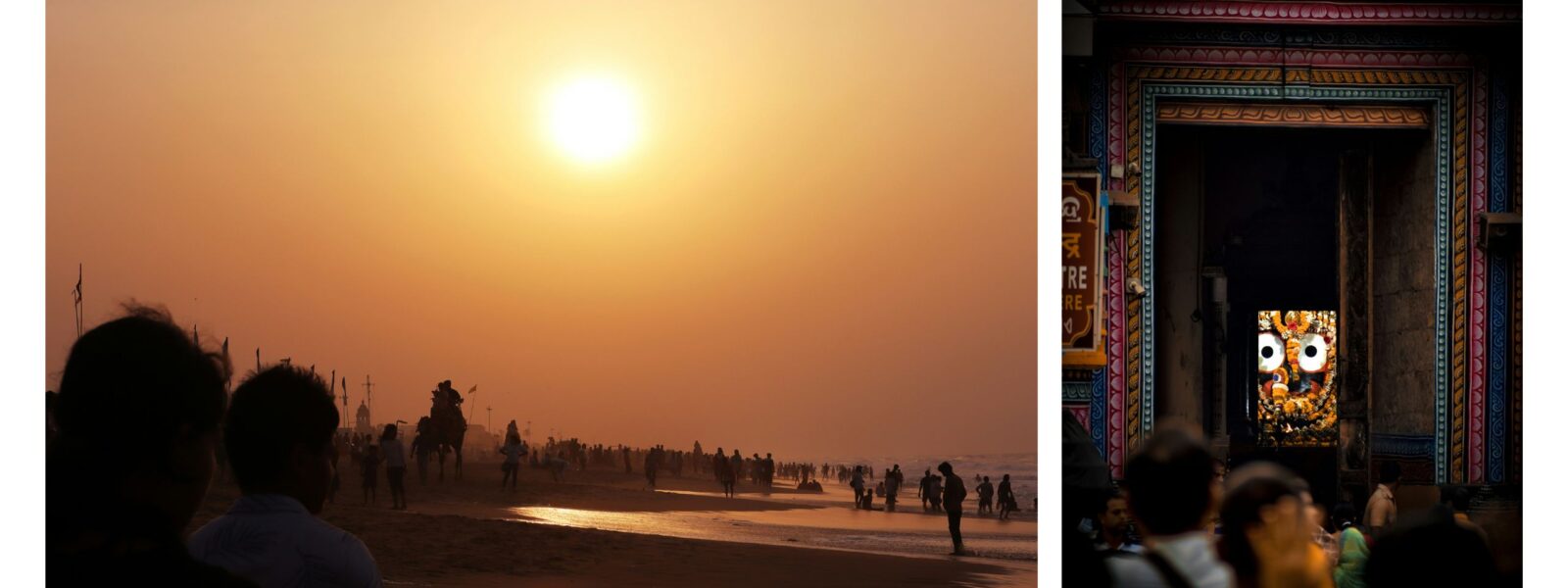
At the heart of Odisha’s spiritual identity stands Lord Jagannath. His principal shrine, the Jagannath Temple in Puri, is one of India’s most sacred pilgrimage sites. Built in the 1100s, the temple is famed for the annual Rath Yatra, when immense chariots carry Jagannath through throngs of devotees. (This is where we get the English word “juggernaut” from).
Jagannath’s form is strikingly abstract, with large round eyes and unfinished limbs, a style rooted in tribal traditions that predate classical iconography. Lord Jagannath has heaps of character and comes across as one of Hinduism’s most human deities – once a year he catches a cold and retires from public appearances.
From the 1970s onward, Puri became a magnet for backpackers and spiritual seekers, attracted to its laid-back atmosphere. In the 1980s, it emerged as a quiet hippy enclave, where travellers mingled with sadhus, and cafés catered to a growing countercultural scene.
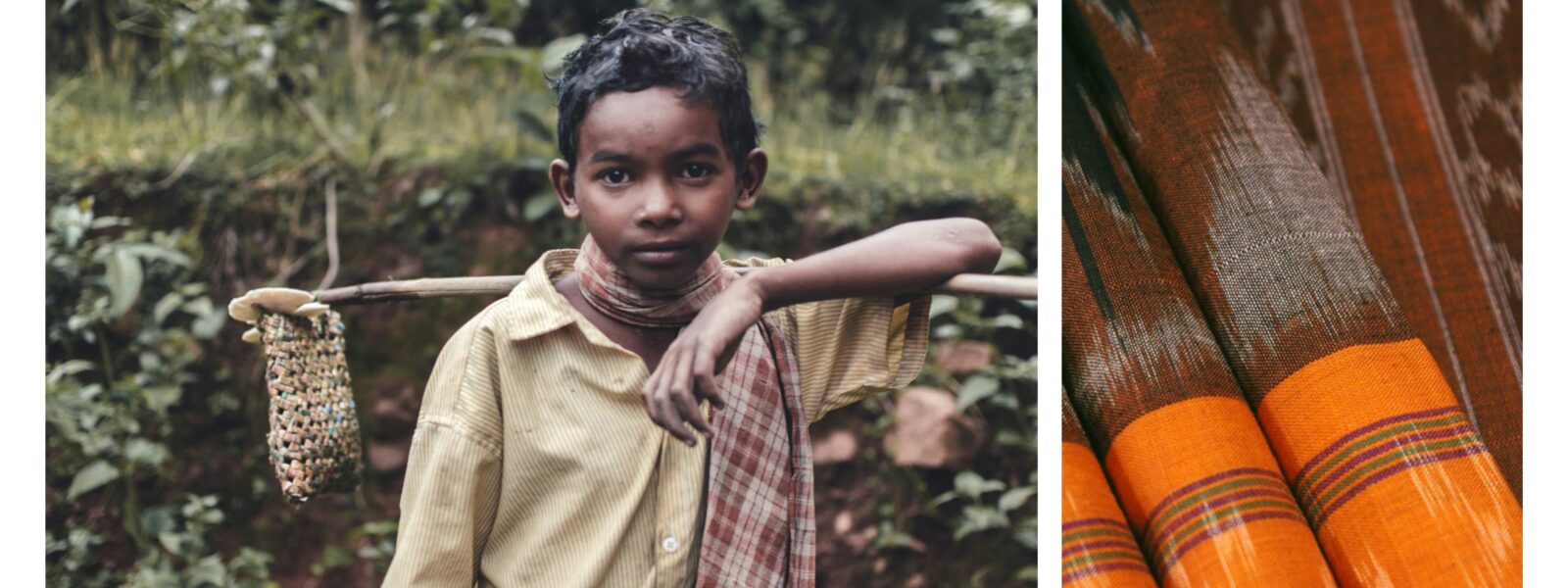
Odisha’s textile traditions are among India’s richest, shaped by centuries of craftsmanship, devotion and storytelling. Across the state, weaving is not merely an art but a living heritage, with patterns, dyes and techniques passed from generation to generation. Among its most celebrated contributions are ikat, tussar silk and the striking Gamcha Bomkai weave.
Ikat from Odisha, known locally as “bandha”, is famed for its intricate resist-dyeing process, where threads are tied and dyed before being woven. The result is fabric patterned with blurred, feathered edges that seem to shimmer in motion. Odia Ikat saris and textiles are renowned for motifs carry symbolic meaning – from conch shells and lotus flowers to temple spires.
Equally prized is Odisha’s tussar silk, spun from wild silkworms that feed on trees like arjun and asna. The fabric has a natural golden sheen, a textured feel, and a warmth ideal for both saris and shawls. In tribal and rural Odisha, tussar weaving is deeply connected to ritual and identity, with designs often inspired by local flora, fauna and festivals.
Perhaps most distinctive is the Gamcha bomkai weave, a fusion of traditional bomkai embroidery techniques with the bright, checked patterns of the gamcha, a humble handloom towel used daily across Odisha.
Together, these textiles embody Odisha’s layered history – from temple ritual and courtly elegance to everyday village life – making the state a living archive of India’s weaving heritage.
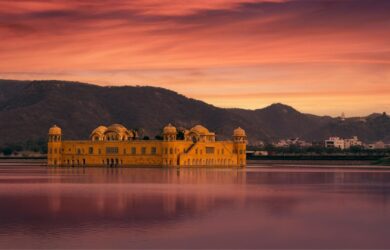
From Jaipur Literature Festival to India’s eastern coast, with Abir Mukherjee & friends.

A literary journey on the River Hooghly with Sam Dalrymple & Nilanjana Roy.
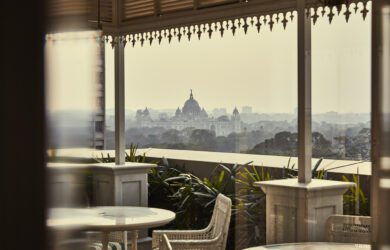
Walk the streets and discover the turbulent, hidden histories of Kolkata.
