Subscribe to our mailing list
We are still here! Let us send you tips for travelling through Myanmar and stories from the road …


Last updated: 9 October 2026
Here is our practical information for travelling in Myanmar including visa requirements, security concerns and recommended vaccinations. We suggest you also consider your home country’s travel advice for Myanmar. See here the British FCDO travel advice, here the US State Department and here from the Australian government.
Sampan’s Myanmar team is based in Yangon – this means our travel advice for Myanmar is accurate and up-to-date.
It is possible to visit Myanmar but some restrictions still apply. The majority of travellers to Myanmar require a visa. E-visas can be applied for online. Parts of the country remain off-limits to tourists.
It is necessary for almost all countries to secure a visa before arrival in Myanmar. E-visas can be applied for online at the Ministry of Immigration and Population (MoIP) website. When applying it is necessary to present proof of a hotel booking and return flight (if travelling with Sampan, we can provide this for you). See here the Myanmar visa requirements or contact us directly. The review of a tourist e-visa application should take 3-5 business days. A tourist e-visa is valid for 28 days and is for single-entry only.
To complete your registration, an activation email containing a verification link will be sent to the email address you provided.
Please follow these steps:
Once your account is activated, you may log in and proceed with your Myanmar e-visa application.
Please note that activation emails sent from ack@moip.gov.mm are often blocked by “btinternet.com” email addresses and may not be received. To avoid this issue, we recommend registering with an alternative email provider.
Be sure to print out your e-visa so to present it to Immigration upon arrival in Myanmar.
Visas can also be obtained at most Myanmar embassies. It may be necessary to apply in person and you may be requested to provide your CV (to see where you have worked in the past) and your planned travel itinerary. A tourist visa takes up a full page in your passport. Validity usually expires after 90 days so do not apply too early.
The land crossing border entry point at Ranong on the Thai border is open. It is possible for not only Myanmar and Thai citizens but third-party nationals to also cross over the border at Ranong. It is currently possible to enter or exit Myanmar with an approval letter at Tachileik / Chiang Rai. Restrictions may apply for some nationalities. It is not currently possible to enter or exit Myanmar as a tourist over the land borders with China or India.
Please contact us for more information on all Myanmar land crossing entry restrictions.
For some parts of the country, in addition to a valid visa, travel permits are required. Some other parts of the country are entirely off-limits to tourists. The situation is fluid so please contact one of our travel consultants for up-to-date Myanmar travel requirements and regulations.
Myanmar is one of the most welcoming countries to travellers. However, recent political turbulence has increased the security risk. Fighting continues in various regions.
In November 2020, Myanmar held a general election and Daw Aung San Suu Kyi’s National League for Democracy won a landslide victory. The Myanmar military (the Tatmadaw) claimed widespread fraud and seized power on 1 February 2021. Suu Kyi, President U Win Myint and other members of the elected government were arrested. Peaceful pro-democracy demonstrations took place across the country and these were violently suppressed.
“People’s Defence Forces” (PDFs) were set-up to resist the Myanmar military, joining forces with ethnic armed organisations (EAOs) who have been battling with the Tatmadaw – mainly on Myanmar’s frontiers, for decades. Today, the fragmented coalition opposing what happened in February 2021 – continues to fight the Myanmar military in parts of the country. Air strikes, artillery bombardments, landmines and armed clashes are common in these areas.
In December 2025 and January 2026, the Tatmadaw carried out an election – and the new administration took their seats in Parliament in the spring of 2026.
Considering all this, we are regularly asked whether Myanmar is safe to travel to. It can be. Much of the country looks curiously like it did in 2019. Shopping malls are busy in Yangon; bars are open and they are busy. Cycling through southern Shan State remains peaceful.
That being said, a foreigner travelling in Myanmar might see an increased presence of military and police. You will occasionally pass checkpoints. More often than not, you will simply be asked where you are travelling from and where you are travelling to. If you are travelling with a Myanmar driver or guide they will be able to answer for you. Sometimes you will be asked to show your passport. Often you will not.
Sampan has been carrying out tours in Myanmar – safely and responsibly – since 2021.
Tourists in Myanmar are not targets. You will likely be treated with courtesy and respect by everyone you come across. In all interactions with security forces we recommend you behave politely and business-like. Always travel with your passport and visa, and have plenty of copies to hand. Listen to the advice of your guides and drivers. If you do not, it is possible that you will put them in danger, even if you are not reprimanded yourself.
Do not travel where you are not supposed to. There is no curfew in Yangon, however, a curfew is in place (1AM to 4AM) in other parts of the country. Be sure not to be out after curfew. Be cautious and discreet when talking about politics. Never take photographs or footage of security forces, nor their buildings or vehicles. Don’t fly drones. Avoid public demonstrations. Do not overstay your visa. Inform yourself of the situation – this practical information for travelling in Myanmar will help.
Myanmar is a real country with real people and so incidents involving tourists and civilians have been known to take place. However, we would argue that crime against travellers is much less common in Myanmar than in other southeast Asian countries. Petty crime and attacks against foreigners are incredibly rare. Most people who approach travellers out of the blue are simply keen to practice their English. Broad smiles will get you pleasantly through most encounters.
Based on the ground in-country, Sampan is acutely aware of Myanmar’s security situation. We take precautions to ensure that we are aware of developments throughout the country so to keep our guests and partners as safe as possible.
We recommend all travellers in Myanmar to take out comprehensive travel insurance. Most standard insurance policies do not cover incidents which take place when travelling outside of your home government’s travel advice. Sampan recommends you consider insurers that can tailor policies to regions outside of travel advice such as Allianz, IMG, and High Risk Voyager. Your eligibility for such policies depends upon your nationality and/or residency.
Sampan utilizes resources such as international government travel advice (here from the UK and here the US) and alerts, local and international media, and our wide network of contacts throughout the country to create a security map of Myanmar. With these precautions, although risk cannot be 100 per cent eliminated, it can be safe for foreign travellers in Myanmar.
The military’s seizure of power has reignited the ethical debate about travel to Myanmar. Follow the following link below to read why Sampan still encourages responsible travel to Myanmar. You can read more about the political history of Myanmar here.
Recommended travel vaccines for Myanmar include hepatitis A and typhoid. The cautious may wish to take immunization from hepatitis B, cholera, Japanese encephalitis and rabies. A yellow fever vaccination may be required depending on recent travel history. We strongly recommend travellers speak to their local health practitioner for up-to-date advice.
The most common ailment that afflicts visitors to Myanmar is diarrhoea that lasts only a day or so. If you do get diarrhoea, take some oral rehydration salts. If you need to purchase these while in Myanmar we recommend Royal D – available in most pharmacies and supermarkets. You should seek medical advice if diarrhoea continues for more than three days. If there is blood or mucus in your stool, you may have dysentery and should see a doctor.
We urge you to not let the chance of suffering diarrhoea get in the way of trying the local food. Often it is from poorly prepared international dishes that travellers get sick.
The heat of Myanmar can always be a risk to travellers not used to these temperatures. (See below for more on Myanmar weather and climate). Dehydration can lead to heat exhaustion with symptoms such as weakness, nausea and a rapid pulse. If showing signs of dehydration or heat exhaustion, remove yourself from the heat, rehydrate yourself and rest with your feet elevated. Heatstroke is more serious, with symptoms of confusion and loss of co-ordination. Seek medical attention immediately if showing such symptoms. Wet and cold clothes or ice should be applied to your body as soon as possible.
Note that when off the beaten track, squat toilets are more common than Western-style toilets. Be sure to have hand sanitizer and a bit of toilet paper to hand. Sampan provides our guests with these upon arrival.
All travellers in Myanmar should take care to avoid being bitten by mosquitos. Apply mosquito-specific repellent and cover exposed skin. It is extremely rare for travellers to catch malaria. However, travellers may wish to take prophylaxis as the disease is present outside of Yangon, Mandalay and areas below 1,000 metres elevation. Early symptoms of malaria are fever, sweats, body pains and chills. Symptoms of severe malaria include looking pale, yellow eyes and skin, seizures and difficulty breathing. Attention from a medical professional should be sought if exhibiting these symptoms.
Some mosquitoes in Myanmar carry dengue. It is rare for travellers to catch dengue. However, if you do, take rest and, if you require it, paracetamol, but not aspirin. If symptoms worsen and persist, seek medical attention. The dengue mosquito bites during the daytime and at any time of year.
Chikungunya, a viral infection usually transmitted by the bite of mosquitos, is also present in Myanmar. Chikungunya is less common than dengue. Usual symptoms of chikungunya are fever and joint pain. Treatment is focused on relieving the symptoms, which can vary in severity and duration.
When in Myanmar, Sampan recommends International SOS in Yangon and Pun Hlaing in Yangon, Mandalay and Taunggyi. If you are a guest of ours travelling through Myanmar, your guides and Sampan travel consultant will offer you advise and if necessary direct you to the nearest medical facilities.
Sampan stresses the importance of taking out private travel and/or health insurance that covers medical care and emergency evacuation, as in the most serious cases you may need to be taken to Bangkok. Furthermore, we urge visitors to speak to their local doctor before travelling to Myanmar so to receive accurate and up-to-date travel health and hygiene tips for Myanmar as well as all current recommended Myanmar vaccinations and medical-related practical information for travelling in Myanmar. We also recommend the British government’s thorough travel health and hygiene tips for Myanmar and the TravelHealth Pro site.
The best time of year to visit Myanmar is the cool season from November through to February. It is not scorching hot but the skies are clear. You will want a light jumper in the mornings and evenings or, for example, if travelling by boat at Inle. You will want more than a light jumper when visiting the hill regions of Shan State in the east of the country.
The Myanmar climate is split into three seasons. The cool season, November through to February with average temperatures of 20-25°C (68-70°F). The hot season, March through to May with average temperatures of 30-35°C (86-95°F). And the green season (the monsoon) June through to October with average temperatures of 25-30°C (70-86°F). Myanmar’s ‘cyclone season’ runs from April to October. It is unlikely that a cyclone will disrupt your journey in Myanmar.
Of course, it is possible to travel here any time of year. The best month to visit Myanmar really depends upon your preference. We would recommend the green season ahead of the hot season. The landscape is a luscious green – in contrast to the hot season when it is dry and arid. The heat of the hot season is more likely to make you take shelter and restrict you to the hotel than the rain of the green season.
That being said, note that during the monsoon some off the beaten track destinations will be unreachable due to flooding. This includes Chin State in the north or even Hpa-An and Mawlamyine south of Yangon. It is usually not possible to visit the islands of the Mergui Archipelago (the far south) during the monsoon and many coastal hotels will be closed.
The weather in Myanmar can always surprise. When considering what to pack, you will want a hat, sunglasses and sun cream any time of year. Always bring at least one jumper and a pair of long trousers. Sampan can provide you with umbrellas and ponchos. We will also provide you with our Kit List prior to arrival. Contact one of our travel consultants for more information on the weather and other in-depth, up-to-date practical information for travelling in Myanmar.
The majority of hotels, restaurants and bars catering to international travellers have wi-fi. However, since 2021, the coverage of internet in Myanmar in general has become much worse. Phone data is quicker than wi-fi – but remains patchy. Digital security is poor.
It is possible to buy a local SIM card in Myanmar. It is best to do this upon arrival at the airport. You will need to register your SIM so bring along a copy of your passport photo page, visa and a passport photo. Which network signal is best in Myanmar? MPT (state-owned) has the best coverage throughout the country.
If you are travelling with Sampan, we may be able to help you with a tourist SIM card or an alternative. Please check with your travel consultant.
Myanmar’s country code is +95. When contacting local organizations in Myanmar, the quickest way to receive a response will likely be via Facebook Messenger, but …
… the Myanmar military has banned a range of websites and apps in Myanmar, including Facebook and WhatsApp. Most people in the country use a VPN to access these apps. Consequently, the use of VPNs has also now been banned. VPNs are widely in use but access is restricted. You can read here about digital security in Myanmar or contact one of our travel consultants.
Note that if you plan to be in Myanmar for more than 30 days, you will need to register your IMEI (phone identification number) to continue accessing the mobile phone network with that device – this is irrespective of the SIM card you are using. You will need to register with Myanmar’s Central Equipment Identity Register (CEIR). Note that this comes with certain data privacy risks.
Domestic flights operate around much of Myanmar. There is a wide network of public buses and coaches. Train travel is limited. Private cars can be used to reach much of the country.
Most of the airlines that Sampan books with use ATR–72s. For the majority of there airlines, there is a 20 kilogram limit for checked luggage per person. Note that it is not possible to check-in online prior to your flight. Cigarette lighters must be packed within checked-in luggage on all domestic flights.
Most coach companies can accept foreign travellers however certain documents may be required.
If opting for a coach, night coaches are more comfortable. Paying a bit extra for a VIP coach (opt for the 2+1 coaches for extra leg space!) is better than travelling on the budget ‘express’ coaches. Bring jumpers and socks as the air-con is cranked up to the max. Most coach companies also have the irritating practice of stopping in the dead of night at service stations for refreshments and requiring all passengers to vacate the vehicle for 30 minutes. Note that night coaches may have to stop during curfew (however this is not always the case). Also, be aware that some night coaches arrive at their destination in the very early hours of the morning. Check the time of your arrival when you buy your ticket, so not to be stranded hours before dawn. We recommend not asking the driver what time you will arrive, as this can be seen as tempting fate and bad luck …
Myanmar railways are fun. The old locomotives are slow and bumpy, but a new line of trains is being rolled on some routes. Some railway lines are currently not operational. Private cars are a more expensive option but ensure that money is going directly to good people – Myanmar’s wonderful guides and drivers! It allows you to see the country at your own speed, close-up. In Yangon we recommend using Grab (the Uber of southeast Asia) for comfort and fixed fares.
Trishaws can be hired in Yangon, tuk-tuks in Mandalay, and e-bikes in Bagan. In places like southern Shan State it is possible to travel almost entirely by boat, bicycle and your own two feet. Hurrah for the planet! Contact us for more practical information for travelling in Myanmar.
The currency in Myanmar is the Myanmar kyat – ‘MMK’ – pronounced ‘chat’.
Although credit and debit cards are accepted at major hotels, most large shops and restaurants, you should avoid using your Visa, Mastercard or AmEx card in Myanmar, due to the risk of your bank freezing your card due to international sanctions and the threat of online scammers. You are also likely to be charged at an unfavourable exchange rate. We suggest you bring a sufficient amount of cash to exchange for personal expenses.
USD is the best currency to bring to Myanmar. We recommend that the dollars you bring are principally 100s. These receive a better exchange rate than lower denominations. Ensure your notes are as crisp and clean as possible. Notes with creases or marks are liable to be rejected at banks, exchange outlets and even hotels and restaurants. Exchange of other foreign currencies such as EUR, CNY and GBP can be difficult outside of Yangon. Note that although the official Central Bank of Myanmar exchange rate is MMK 2,100 to the dollar, the real street rate is much higher (at the time of writing, approximately MMK 4,300).
Due to concerns over counterfeit money, USD with the letters AB and CB at the start of the serial number (top left-hand corner of the note) aren’t always accepted. Notes with pen marks, folds or tears are also not accepted. Read more about Myanmar’s curious priggishness towards USD here.
Banks are closed on Saturdays, Sundays and all public holidays. Few ATMs are operating in the country (and should be avoided with international cards anyway – see above).
Traditionally, Myanmar travel expenses were higher in comparison to other countries in Southeast Asia. Today, the hotels that remain open are generally cheaper than in 2019. Taxis, tuk-tuks and local food are inexpensive.
Below we have listed some everyday prices to help you budget for your Myanmar trip. We have made a rough conversion (with the street rate) into USD and GBP for your ease:
A private taxi from the airport to downtown Yangon (45 minutes to an hour) costs approximately USD 8 (GBP 6). Double that for a similar length journey in other parts of the country.
For hearty, local fare you are looking at something like USD 3 (GBP 2.50) per dish. Snacks, salads and noodle dishes will be cheaper. International cuisine and anything served in a hotel or one of the international airports will be more expensive, maybe USD 6 (GBP 5). Dishes at the handful of gourmet European restaurants in Yangon can rise to USD 50+ (GBP 40+).
In a café or restaurant, fresh fruit juice will probably be around USD 3 (GBP 2.50); a real coffee the same. A pint of beer will cost approximately USD 1 (GBP 0.80). Cocktails around USD 3 (GBP 2.5) and a glass of wine at a similar price. A bottle of water is USD 0.20 (GBP 0.15) and a pack of cigarettes USD 1 (GBP 0.80).
… And if you’re wondering, a carton of milk is about USD 2 (GBP 1.6).
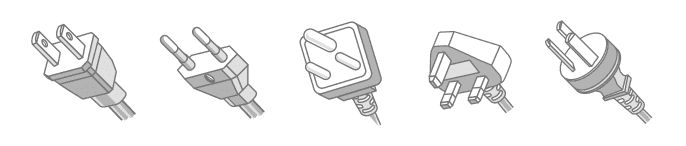
A variety of sockets and plugs are used in Myanmar. This includes type A, type C, type D, type G and type I. A, C and G are most common and many of the electrical outlets can take all of them. The electricity supply in Myanmar is 230V, 50 Hz AC.
If you are without the right power plug at any time, most hotels or restaurants will be able to find a power adapter for you. See the image below for more on Myanmar power plugs (courtesy of Lonely Planet.)
There are chronic electricity shortages in Myanmar. This is a result of years of poor planning that has been compounded by political turbulence since 2021. As much of Myanmar’s energy comes from hydroelectricity, the capacity of the power grid is at its lowest during the hot season (March-May) when there hasn’t been consistent rain for several months. Right now, most of the country is under scheduled power outages. Other parts of the country are under unscheduled power outages. We recommend bringing a power bank to keep yourself charged.
Most high-end hotels and restaurants will have generators. Others may use solar. Some smaller hotels might have generators but only turn them on upon request. Sampan is aware of the situation of each of our partner hotels and restaurants – please feel free to contact us for more information.
There is no hard-and-fast rule for tipping in Myanmar. We recommend that clients tip at their own discretion. Generally, tipping in Myanmar will be welcome but not necessarily expected.
When in very rural or remote destinations, a tip probably won’t be expected. Insisting on leaving one can lead to confusion and embarrassment. Best to be unfussy and not make a song and dance of it. Referring to it as a gift – ‘let saung’ in Burmese (လက်ဆောင်) – may help clarify the situation.
Guides generally expect a tip. Sampan’s Myanmar tipping guidelines recommend a USD 10 tip (in local currency) per day per guest for guides. If you do decide to tip the guide, please do also consider tipping the driver (of car and/or boat) if you have one. We suggest you tip your driver half of whatever you tip your guide.
Please note, when your meal at a restaurant has not been covered by Sampan, it is up to you whether you wish to invite your guide to join you or not. If you do invite them to join you, it is customary that you will then pay for the meal. i.e. as in other parts of Asia, the person inviting covers the cost of the bill.
A tip of MMK 4,000 is appropriate for a bellboy or porter at a hotel or the airport. It is not necessary to tip taxi drivers.
Bartering (haggling) is a part of Myanmar culture, but not in every situation. It should be accepted that travellers will often be charged a higher price than Myanmar nationals. That being said, our guides will let you know if you are being given an extortionate rate. If you are not in the company of a guide and are not sure whether it is appropriate to barter or not, proceed gently. And in all cases, keep smiling!
Sampan has created ethical shopping guidelines to help travellers spend their money in Myanmar responsibly. We send this automatically to our guests. If you are not a guest of ours, please contact us to receive more practical information for travelling in Myanmar.
Same-sex sexual activity is illegal in Myanmar. That being said, most people in Myanmar are accepting of homosexuality. There is a smattering of specifically gay-friendly bars in Yangon. Same-sex couples will face no problem staying in a double room in a hotel but public displays of affection should be avoided.
The colonial law Section 377 criminalizes all sexual acts “against the order of nature”. It is rarely enforced, however it does render those in the LGBTQ+ community vulnerable to police harassment. The “Darkness Law” – also from the colonial era – is often used by Myanmar police to penalize trans people for “acting suspicious” or being “in disguise.”
In society, homosexuality remains culturally sensitive but great strides have been made in recent years. Myanmar hosted its first gay pride festival in 2017 and the LGBTQ+ film festival &proud debuted in 2014 with 1,500 attendees. Before COVID-19, there was a monthly LGBTQ+ club night called FAB – predominantly frequented by locals.
We can confidently say that Myanmar is safe for LGBTQ+ travellers. Openly gay-friendly establishments in Yangon include Ô’Thentic Brasserie and Freedom Bar.
That being said, Myanmar is still a socially conservative country. Sex is rarely discussed openly and public displays of affection, homosexual or heterosexual, should be avoided.
You can read more about LGBTQ+ rights in Myanmar here.
Unfortunately, travelling with a mobility disability in Myanmar is difficult. Most hotels and sites are not set up to accommodate wheelchairs. However, progress has been made on making Myanmar more accessible. Contact us for more information.
Still have questions? Fire away! Our travel consultants will be happy to help. Read more about Myanmar culture and what to do in Myanmar. See here our commitment to responsible travel in Myanmar.
