Subscribe to our mailing list
We are still here! Let us send you tips for travelling through Myanmar and stories from the road …

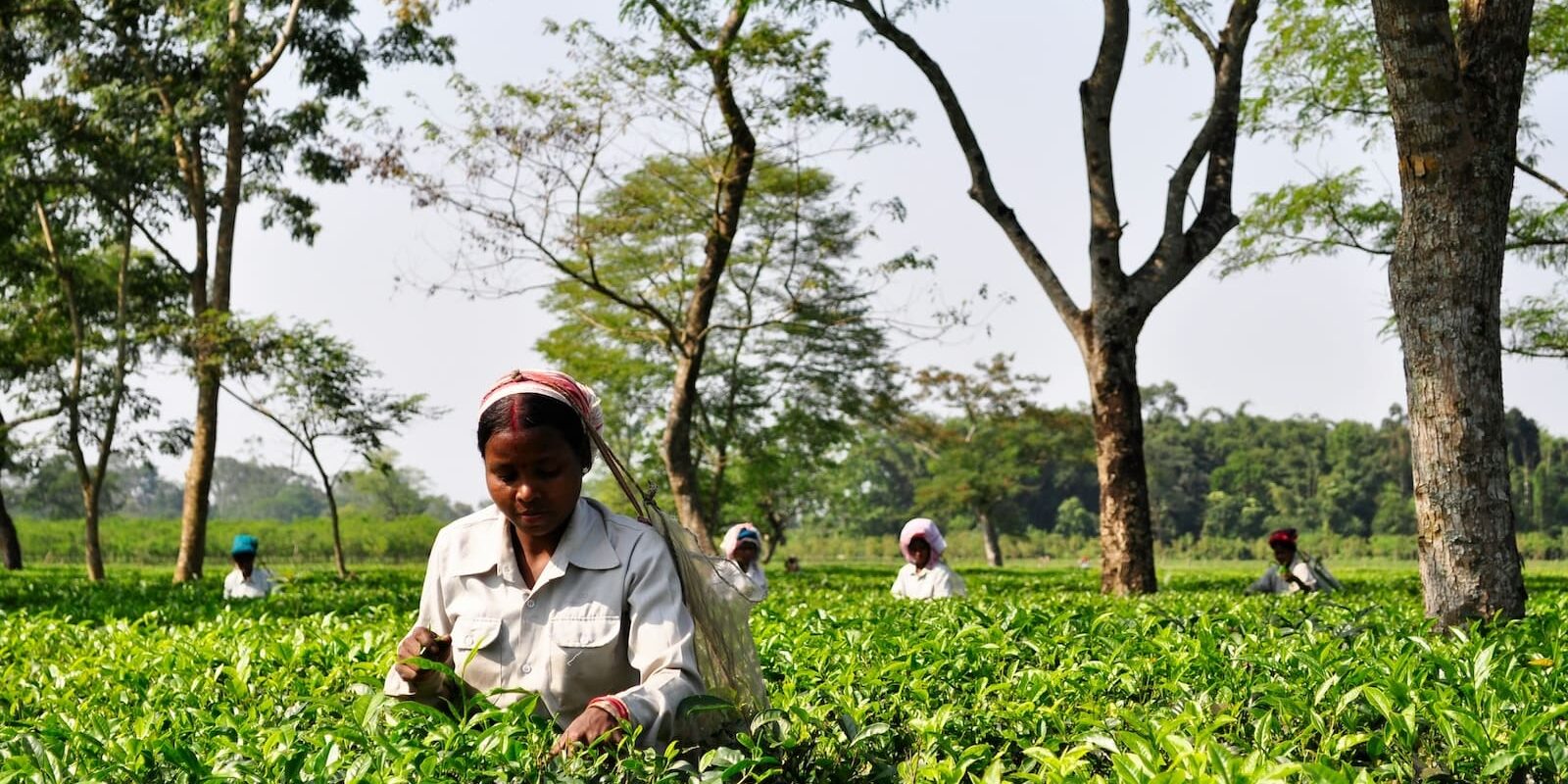
Tea made Assam famous. In the 1800s the British established plantations that transformed the economy and left a distinctive legacy. Today, Assam remains one of the world’s largest tea-producing regions, its estates stretching in neat rows across the plains. Beyond the gardens lie tracts of elephant grass and wetland protected in places such as Kaziranga National Park, home to the world’s largest population of one-horned rhinoceros.
Culturally, Assam is equally layered. Vaishnavite monasteries on Majuli preserve dance, theatre and manuscript traditions. Sivasagar displays the route of Assames culture in the ruins of the Ahom Dynasty.

Sivasagar was the capital of the Ahom Kingdom from 1699 to 1788. The Ahoms ruled Assam for six centuries until their kingdom fell to the Burmese Konbaung dynasty in the 1820s.
The Ahom Dynasty was established by Sukapha, a Shan prince of Mong Mao (present-day Yunnan). The Ahom Dynasty ended with the Burmese invasion in 1826. The Burmese Court of Ava’s aggressive expansion into Manipur and Assam led to the First Anglo-Burmese War. The British won this, and at the Treaty of Yandabo, were granted not only large swathes of Burma, but also Assam.
Today, the most famous of the Ahoms is the general Lachit Borphukan. Along the lines of Shivaji, the general is fervently celebrated in Delhi and Assam for fighting off the Mughals, defeating them in the Battle of Saraighat in 1671 on the banks of the Brahmaputra near Guwahati.
Majuli, the world’s largest river island, is the centre of Assamese neo-Vaishnavism, which started in the 15th century under the Assamese saint Srimanta Sankardeva. One of the major Hindu denominations, it is also called Vishnuism, since it considers Vishnu as the sole supreme being.
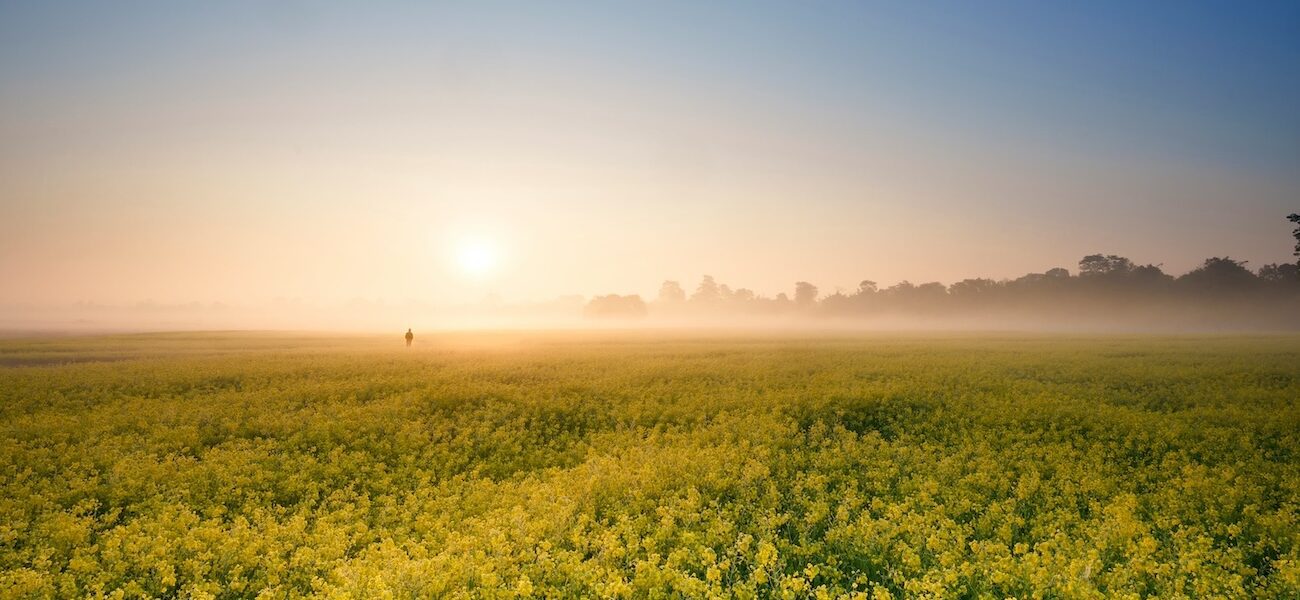
One of the most pleasant things to do on Majuli is to cycle past the mustard flower fields – green during the monsoon, gold in winter – and through the villages of the Mishing ethnic community. Grin and wave. If you are lucky, you may be beckoned into a Mishing tribal home and invited to share a glass of Apong – the delightful Mishing traditional rice beer.
Erosion caused by the Brahmaputra poses a significant threat to Majuli’s existence. It may not be the largest river island in the world for long …
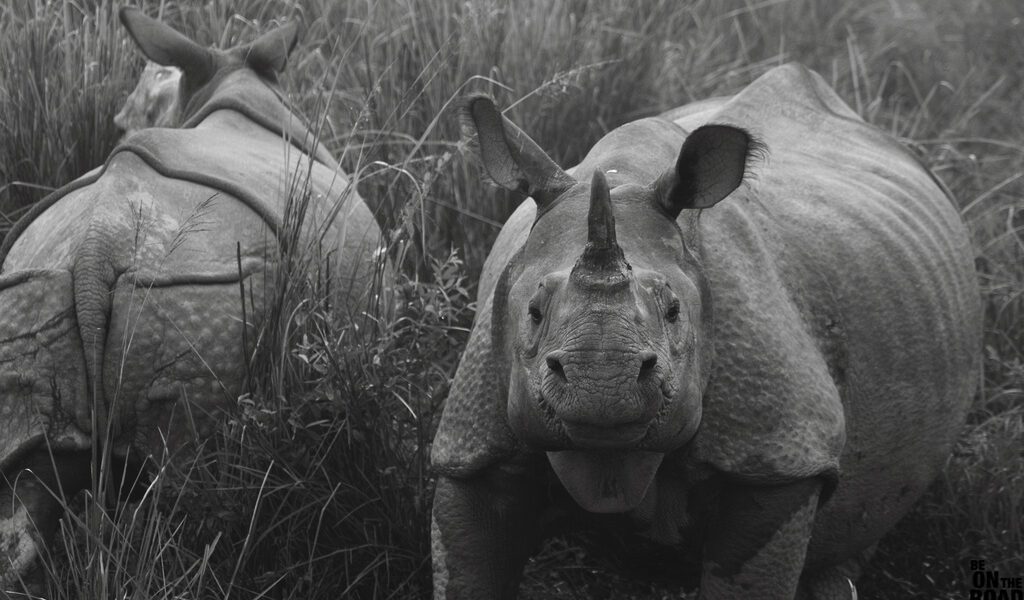
Kaziranga National Park on the banks of Brahmaputra, is home to the world’s largest population of Indian one-horned rhinos. With over 2,000 of them, they graze the lush grasslands like cattle. When Marco Polo encountered them in the 1200s he believed he had found the mythical unicorn. By the time Lady Curzon visited in 1902, poaching for rhino horn had taken a toll: only twelve remained.
In Land of Dawn-lit Mountains, Antonia Bolingbroke-Kent writes:
“Used for centuries as a cure for fever, gout, devil possession, impotence and a host of other ailments, in 2005 a rumour swept through Vietnam that it had cured a top politician of terminal cancer. Prices sky-rocketed, the poachers dusted off their rifles and the mutilated carcasses multiplied. In 2005 only one rhino was poached in Kaziranga. By 2015 the number had risen to twenty-three. If Kaziranga’s army of forest guards wasn’t tooled up with .303 rifles and a controversial shoot-to-kill anti-poaching policy, the numbers would be far higher.”

A literary journey through Bengal & Assam with best-selling author Abir Mukherjee.

Dr Robert Lyman explores the events of WW2 in Kolkata, Kohima and the Naga Hills.
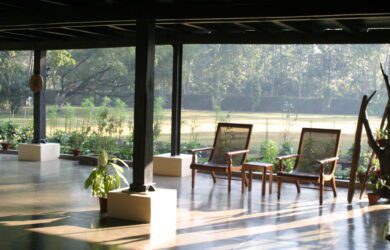
Tea bungalow in Assam. Wake up amongst the plantation with tea in dainty porcelain.
