Subscribe to our mailing list
We are still here! Let us send you tips for travelling through Myanmar and stories from the road …

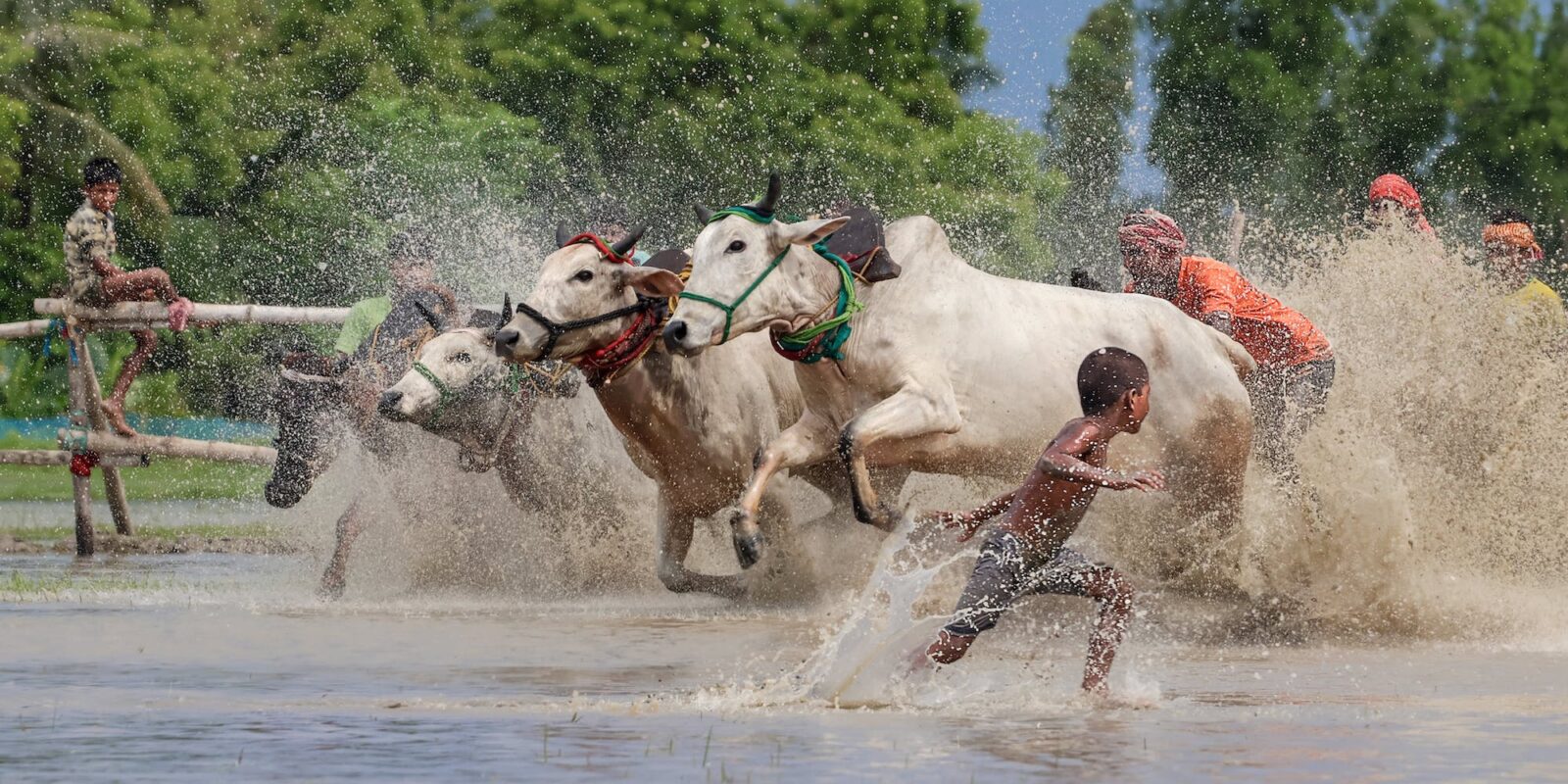
In his seminal book Hooghly, Robert Ivermee writes that “During its time in the global spotlight, the Hooghly was witness to the best and worst of human nature. It saw curiosity, generosity, and friendship, along with beauty and creativity in the production of art and literature or scientific and technological innovation.”
The Hooghly has also seen violence and cruelty. In 1947, the great Partition saw Bengal split in two. The Hooghly became the western boundary that dissects the Ganges Delta between India and Bangladesh, making this region what Sam Dalrymple describes as one of the most fortified and fenced zones on the planet.
On The Great Hooghly Bazaar, cruising upstream we’ll explore India through the prism of this river. Excursions will be complemented with curated talks by writers who have thought deeply about the world through which this river runs.
Starting and ending in Kolkata, aboard the ABN Rajmahal we will make morning excursions to the Hooghly Imambara, Plassey, and the Mughal city of Murshidabad. Afternoons will be peppered with talks and panel discussions. There will also be plenty of time to sit, read, have a drink and watch the life of the river pass by.
The Great Hooghly Bazaar is a floating exploration of ideas – with great food in good company – on one of the world’s most interesting rivers. We hope you can join us.


The ABN Rajmahal is a 50-metre vessel powered by three engines, designed with an extra-shallow draught and low profile that allows her to cruise further upstream than any comparable ship on the Hooghly. She is not just a means of transport, but a floating retreat: elegant, unhurried and perfectly attuned to the rhythm of the river.
She carries just 22 cabins. The décor is stylish and fresh, with discreet touches of elegance, brought to life through hand-blocked Indian cottons and carefully chosen details. Every cabin opens onto a French balcony, so the river is never more than a step away. Public spaces include a comfortable saloon and bar, a dining room, a vast canopied sundeck, and a small spa offering a range of treatments. All cabins and public rooms are fully air-conditioned, making life on board as civilised as it is indulgent.
Dining is central to the experience. On board, meals draw on both Indian and global traditions, while ashore and in spirit the journey is steeped in the great culinary cultures of Bengal. Bengali cuisine, shaped by centuries of Mughal and later British influence, is renowned for its layered flavours and exceptional sweets. Techniques such as slow braising, marinating with yoghurt and spices, and the generous use of ghee, saffron and cardamom transformed dishes once reserved for courts and mansions into classics of the wider table.
Along the Hooghly, we will also encounter the rarer Sheherwali tradition, born from Jain families invited to Murshidabad over three centuries ago. Blending Rajasthani, Bengali and Nawabi influences, and guided by strict vegetarian principles, this cuisine is both refined and inventive: from cucumber-filled kachori to water-chestnut samosas, scented with rose water and saffron. These are recipes rarely found in restaurants, guarded and passed down through families, and meals traditionally begin and end with sweets such as saffron-infused nimas or date-and-nut confections.
To travel on ABN Rajmahal is to rediscover the river as princes and merchants once did: moving in comfort, dining with ceremony, and watching Bengal unfold from the quiet luxury of the water.
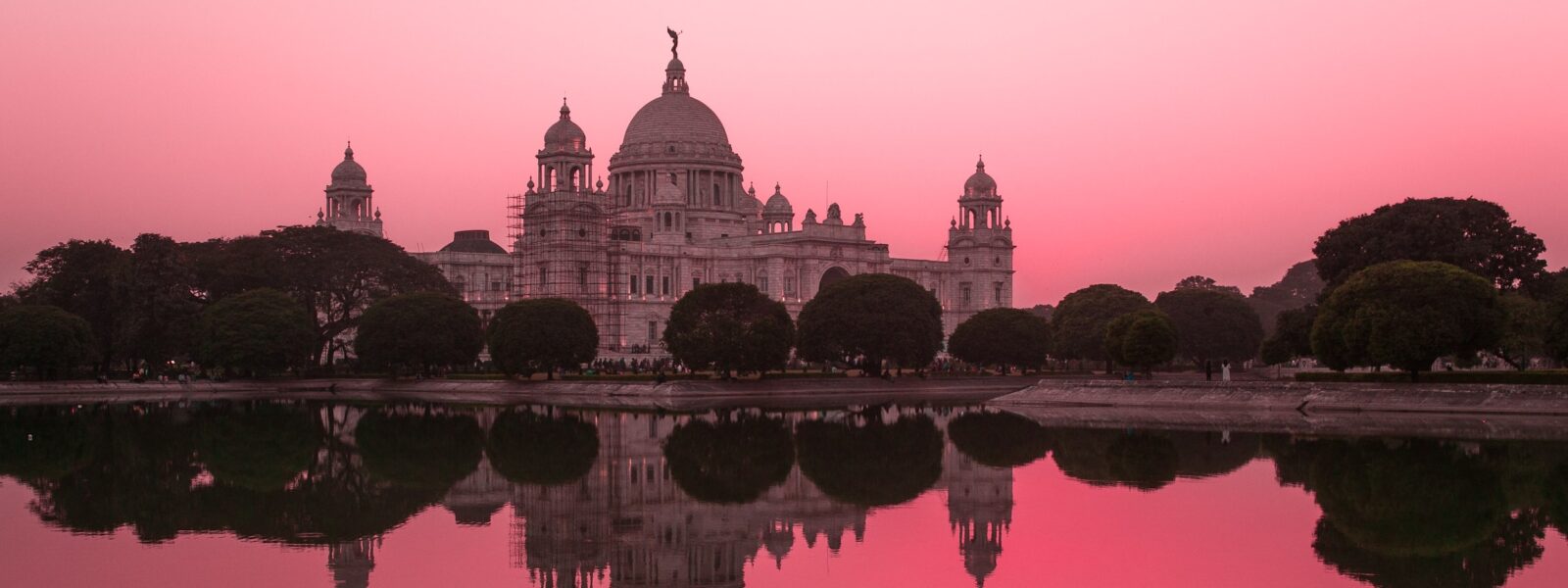
Bengal was one of the richest provinces within the Mughal Empire (1526-1857), governed by the Nawabs in Murshidabad, on the eastern banks of the Hooghly River, 200 kilometres north of where today lies Kolkata.
The Portuguese were the first Europeans to arrive in Bengal, establishing a trading post in 1580 that grew to become the city of Hooghly. Although the Portuguese dominance at Hooghly was short-lived, a precedent had been set. Towards the end of the 1600s, the Danish had settled at Serampore and the French at Chandannagar, both on the western banks of the river. While the efforts of Danish missionaries ultimately withered, the ideas of the lumières birthed with the French Revolution, were later elevated as a counterweight to British imperialism. Robert Ivermee argues that the settlement at of Chandannagar was championed as an island of liberty, equality and fraternity in “an English-dominated sea of despotism and despair.”
While the Europeans had settled on the Western banks of the Hooghly, on 24 August 1690, Job Charnock of the British East India Company, founded a settlement on the Hooghly’s swampy eastern bank. The East India Company’s progression from trade to power-grab is described by William Dalrymple in The Anarchy as “the supreme act of corporate violence in world history.” After the defeat of the last independent Nawab of Bengal at the Battle of Plassey in 1757, the EIC emerged as the dominant force on the river. Charnock’s swampy settlement became Calcutta, which grew to be the second city of the British Empire. That which was a “ruin” when “Clive of India” turned up in 1756, was within forty years described by Governor General Wellesley as “a mass of superb palaces.”
By the end of the nineteenth century, Robert Ivermee writes, Calcutta was an imperial megacity, connected to regional, subcontinental, and global networks of industry and commerce by the technology of steam. One British official was to proclaim:
“Few would have ventured to predict […] that physical drawbacks would be made to yield to the indomitable energy of a foreign race; than in spite of morasses, malaria, hurricanes, and the difficult navigation of a treacherous river, Calcutta would in the nineteenth century be an emporium of trade of the first magnitude, and the Capital of an Empire in East.”
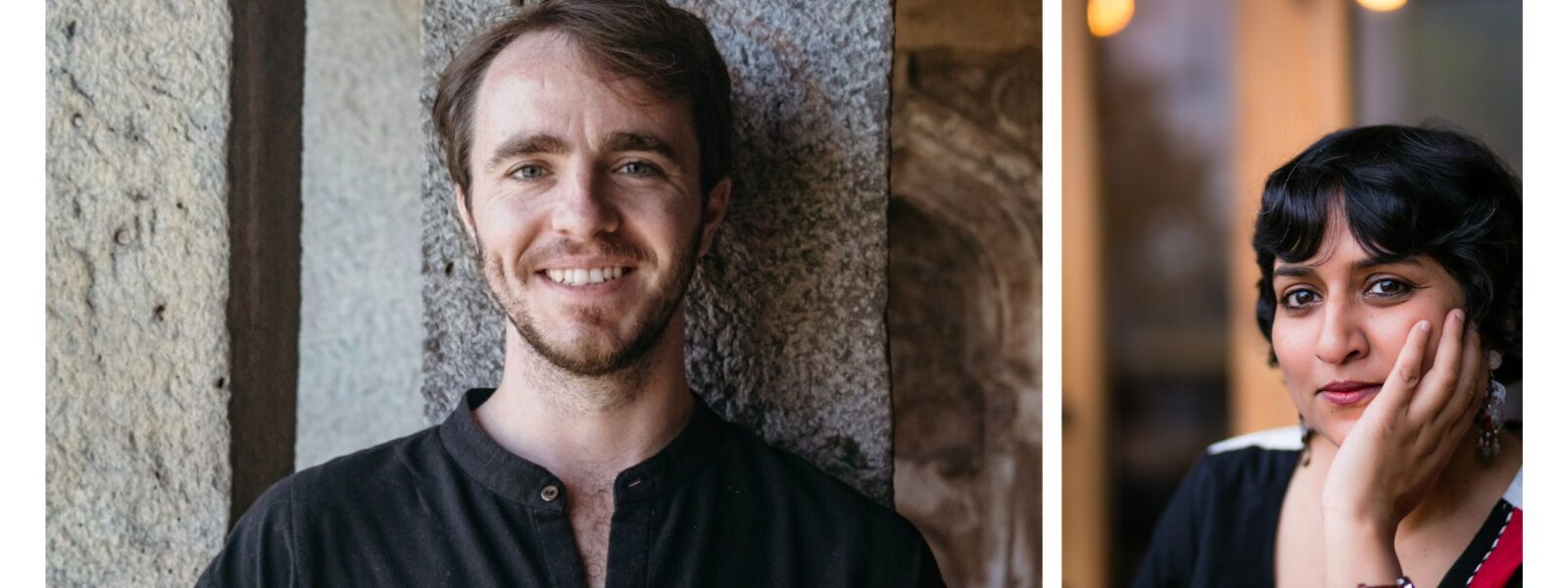
On board the ABN Rajmahal, historian Sam Dalrymple will draw on his acclaimed book, Shattered Lands: Five Partitions and the Making of Modern Asia, to examine how Bengal has been shaped, sundered and reimagined by the forces of Partition.
On the Hooghly, the history of Partition is not abstract. It is etched into the river’s banks: in the refugee colonies that grew around Kolkata, in the severed commercial arteries between Bengal’s twin halves, and in the cultural memory of a region divided first by the British in 1905, then again in 1947, and yet again during the Bangladesh Liberation War of 1971. Sam will explore how these ruptures unsettled identities, redrew borders and continue to inform the politics, migration and imagination of Bengal today.
Shattered Lands traces five major partitions across Asia, but it is in Bengal that Sam’s work finds some of its most poignant examples. His approach blends archival research, family history, and travels along the very landscapes we will traverse: offering guests a rare opportunity to encounter the terrain of Partition not just through ideas, but through place.
Raised in Delhi, Sam is a Scottish historian, filmmaker, and Oxford-trained Persian and Sanskrit scholar. His work across South and Central Asia includes projects with Turquoise Mountain in Kabul and the Aga Khan Trust for Culture in Hunza and Lahore. In 2018, he co-founded Project Dastaan, a peace-building initiative reconnecting refugees displaced by the 1947 Partition of India. His writing has appeared in The New York Times and The Spectator, and he is a columnist for Architectural Digest.
We will also be joined by Robert Ivermee, a historian whose work explores the layered cultural history of South Asia. His book Hooghly: The Global History of a River (2020) traces the story of the Hooghly from the Mughal era to the age of empire, following merchants, missionaries and revolutionaries who shaped the river’s banks and the world beyond.
Introducing and moderating our talks throughout this journey, is Nilanjana Roy.
Nilanjana Roy is one of India’s most incisive contemporary writers. She is a literary critic for The Financial Times and is a member of the jury for the 2026 International Booker Prize. Nilanjana’s acclaimed novel Black River (2022) explores the aftermath of a terrible crime in a small North Indian town. Part crime story, part social commentary, the novel is less concerned with the puzzle of “who did it” and more with what violence does to a community, how systems fail the vulnerable, and how religious prejudice can trample over justice.
More speakers to be announced soon.
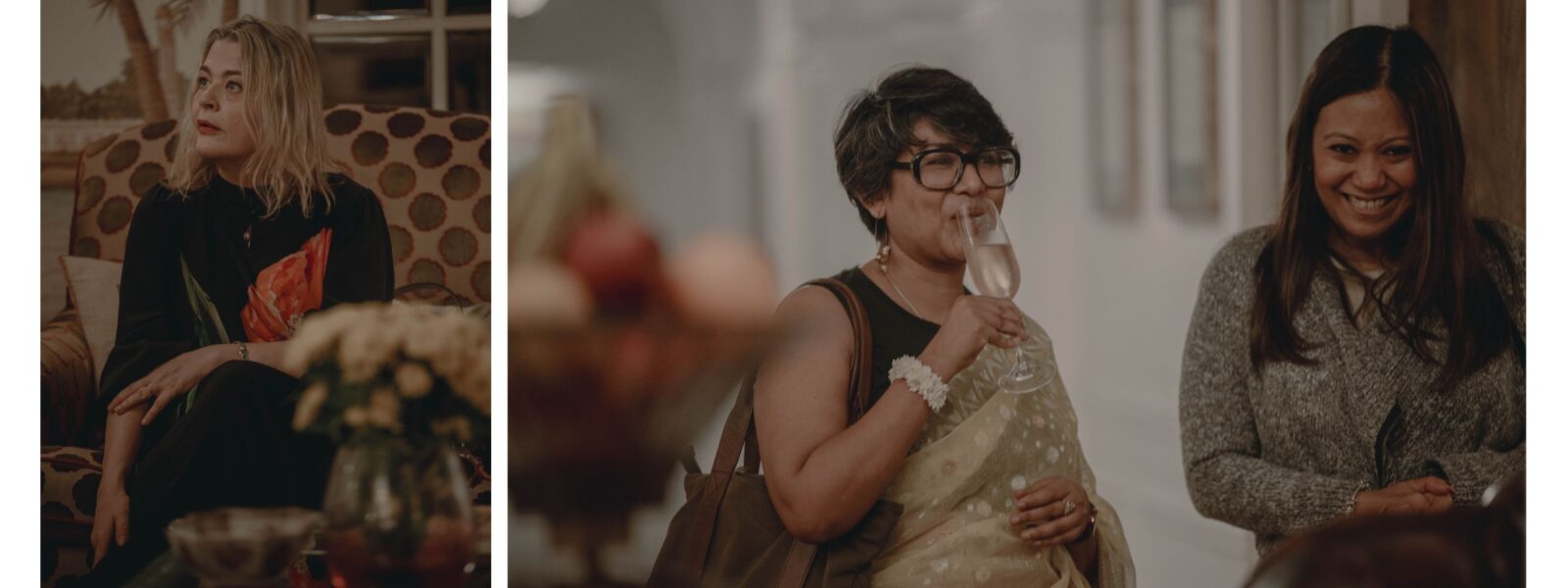
This is the second time that Sampan has launched a literary journey up one of India’s great rivers. Sampan’s Death on the Brahmaputra with Abir Mukherjee on the ABN Sukapha, first took place in February 2026.
Harriet Tyce, author of four novels to date, including the Sunday Times bestsellers Blood Orange and The Lies You Told, described it as “truly magical”. Sunday Times bestselling novelist Erin Young, author of The Fields and Original Sins, said it was “one of those rare tours that manages to combine many different elements seamlessly & does all of them brilliantly.”
Erin says:
“All in all, there was a great mix of adventure along with time to relax. I loved having a morning of exploration and travel, then coming back to the boat for cold towels, welcome drinks & a chance to lounge on the deck with a G&T and watch the sun go down over the wild riverscape.”
Kristina from Sweden, who joined us for the second edition in January 2026 writes that it was “One of the best trip of my life. Bertie is a superb organiser. A very varied and thought out program of high quality with lots of attention to detail. The boat was truly charming with a very attentive staff. I enjoyed the daily lectures and the food, of course. I am a very lucky woman. Thank you all.”
See more in our Visitors’ Book.
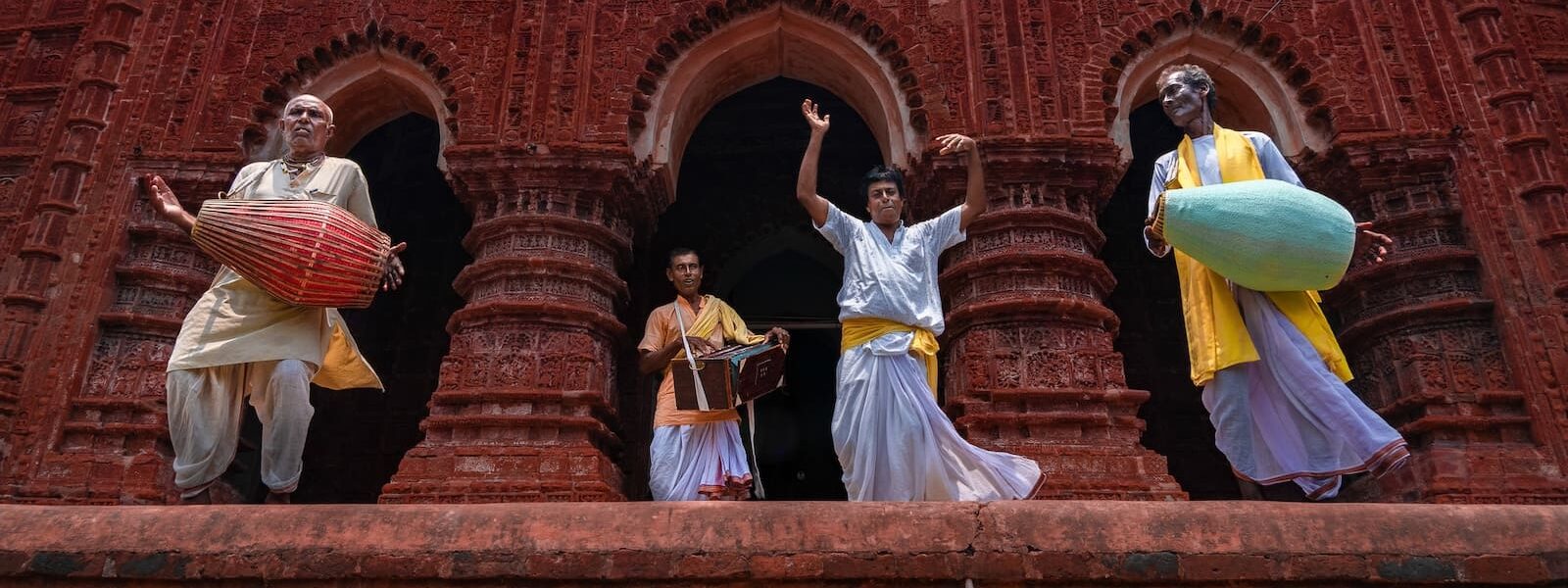
According to the Ramayana, the king Bhagiratha, with Shiva’s aid, brought the waters of the Ganges from heaven to earth to nourish the land. The Hooghly is venerated as the Ganges’s most sacred distributary. Its alternative name – the Bhagirathi – evokes this divine origin.
Today, the Ganges is India’s most visited pilgrimage site. In A Blue Hand, Deborah Baker writes how the Ganga draws “genteel middle-class Hindu pilgrims on holiday, naked, ash-smeared holy men […], and orange-robed sannyasi with shaved sulks and alms bowls.” And recently, no less welcome, “rootless Westerners seeking enlightenment.”
The Hooghly has also been a port of emigration. Calcutta was the primary point of departure for over a million indentured labourers transported to various British colonies between 1834 and 1920. With the advent of regular steamer services across the Bay of Bengal, migration flows soared in the 1870s. Sunil Amrith, author of Crossing the Bay of Bengal, argues that the Asians who moved between 1870 and 1930 carried with them not only their skills and labour power, but also their cultural practices. This was a great migration of ideas.
The British left India in 1947 and the country was partitioned. The River Hooghly remained in India, while some towns, such as the medieval city of Gour just north of the Ganga, were split in two. In his book Shattered Lands, historian Sam Dalrymple writes of Gour:
“It being evenly divided between Hindus and Muslims, Radcliffe’s Bengal Boundary Commission had decided to make the sloping terracotta ramparts of the Kotwali Gate into the border of India and East Pakistan […] The greatest city of medieval Bengal – a central symbol of Bengali identity – had itself been partitioned.”
Tensions between India and Bangladesh peaked in 1975, when India constructed the Farakka Barrage to divert water into the Hooghly, affecting the flow downstream in Bangladesh. A 30-year treaty was signed in 1996 – and is due to expire in 2026 …
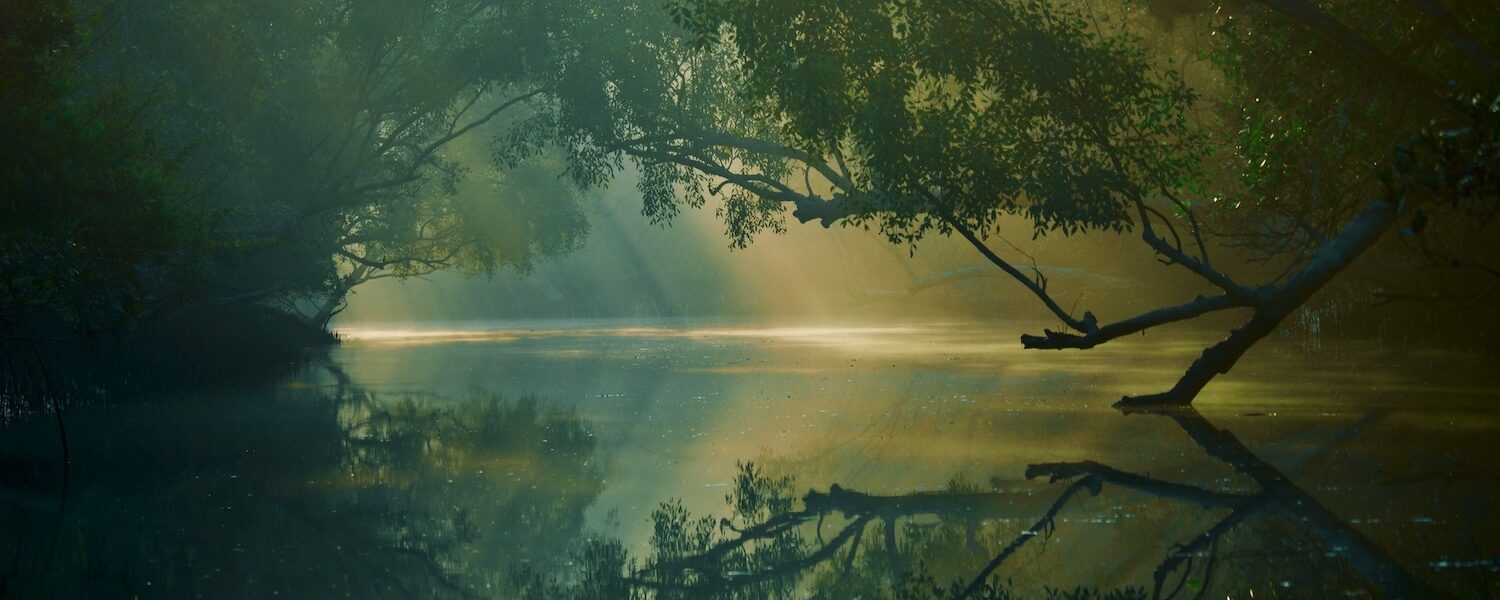
Before the Farakka Barrage, and before the British brigs and the Nawabi houseboats, the Hooghly was home to river dolphins. In 2025, researchers calculated that today, threatened by mining and pollution, there are just over 100 dolphins left. The Irrawaddy dolphin features in Amitav Ghosh’s The Hungry Tide, depicting the people of the Sundarbans in the Hooghly’s delta, “where commerce and the wilderness look each other directly in the eye.” Here the natural world is not moderate or commonplace, but fickle, destructive – even demonic. The hunger of the eponymous tide hints at nature’s destructive power, and at man’s appetite and arrogance.
Ghosh refers to these “not ordinary” times as a “Time of Monsters” – when an old era is dying and a new one struggles to be born. It is in this interstitial era that it has become possible to contemplate new potentialities: Do plants have intelligence? Are rocks sentient? Is a river alive?
The future of the Hooghly is tied to the fate of Bengal. Here, at the close of this journey as at the beginning, we’ll explore the stories we tell ourselves (and those that we don’t) to understand where we are today and the omens for tomorrow.

A literary journey through Bengal & Assam with best-selling author Abir Mukherjee.
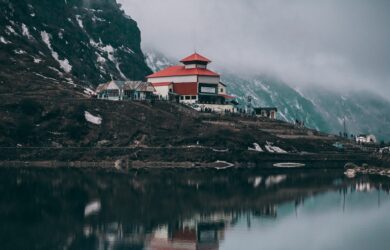
Darjeeling and the story of Sikkim with Jamling Tenzing Norgay.

The Cold War, a fight for freedom and the birth of Bangladesh with historian K.S. Nair.
See the textiles of Bengal and how they weave through the history of India & Bangladesh.
