Subscribe to our mailing list
We are still here! Let us send you tips for travelling through Myanmar and stories from the road …

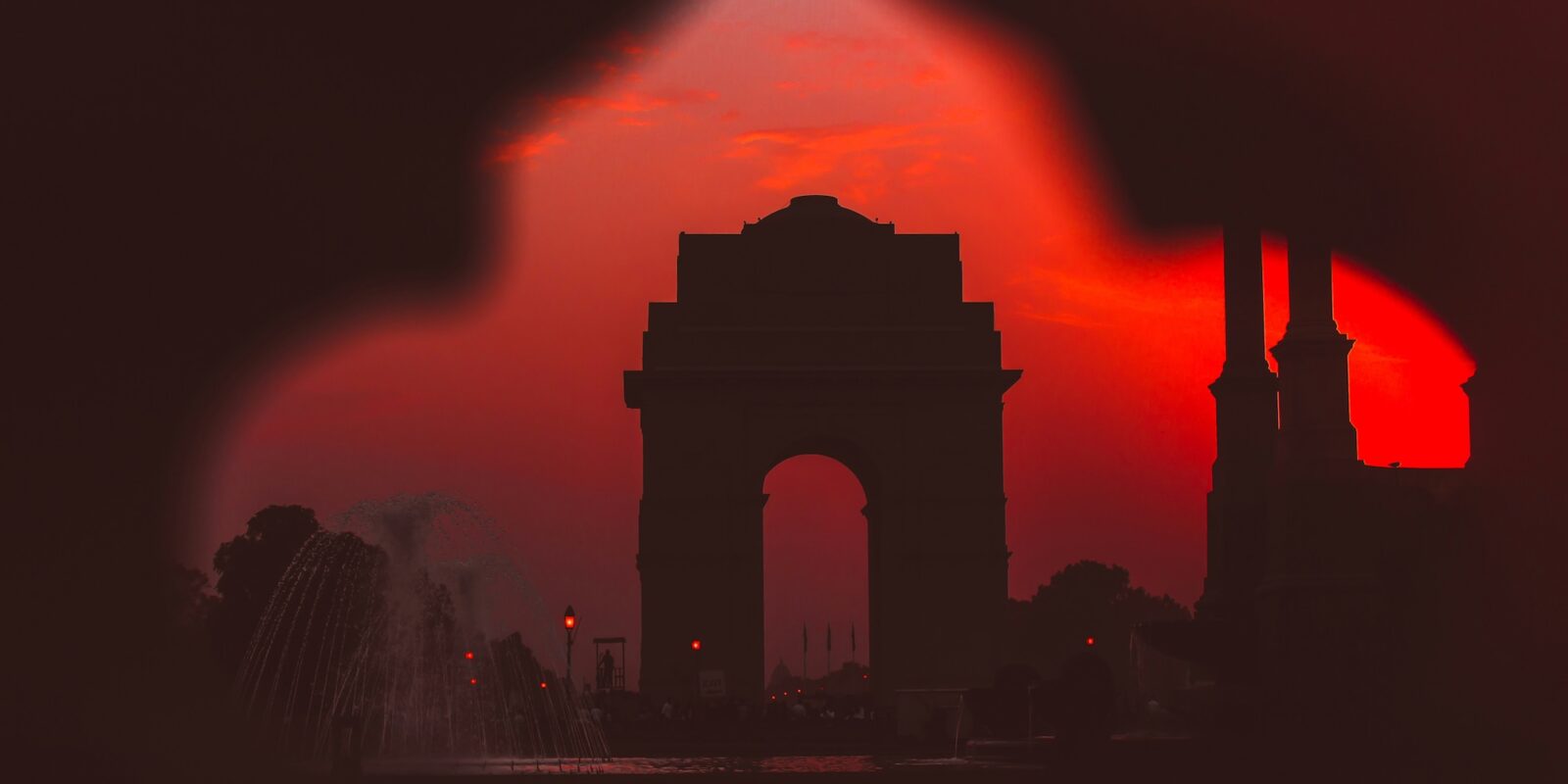
Sampan’s 10-day Rebels at the Red Fort journey traces that rupture across north India: from the battle for Delhi to the shattered Residency at Lucknow; from the contested sovereignty of Jhansi to the final assertions of power at Gwalior.
This is not just a tour of battles. Instead we will look at what led to the uprising in 1857 and how the relationship between Britain and India changed because of it. We explore how annexation and reform had unsettled princes and landholders; how fear spread through colonial society; and how, in the aftermath, British rule hardened and changed the course of world history.
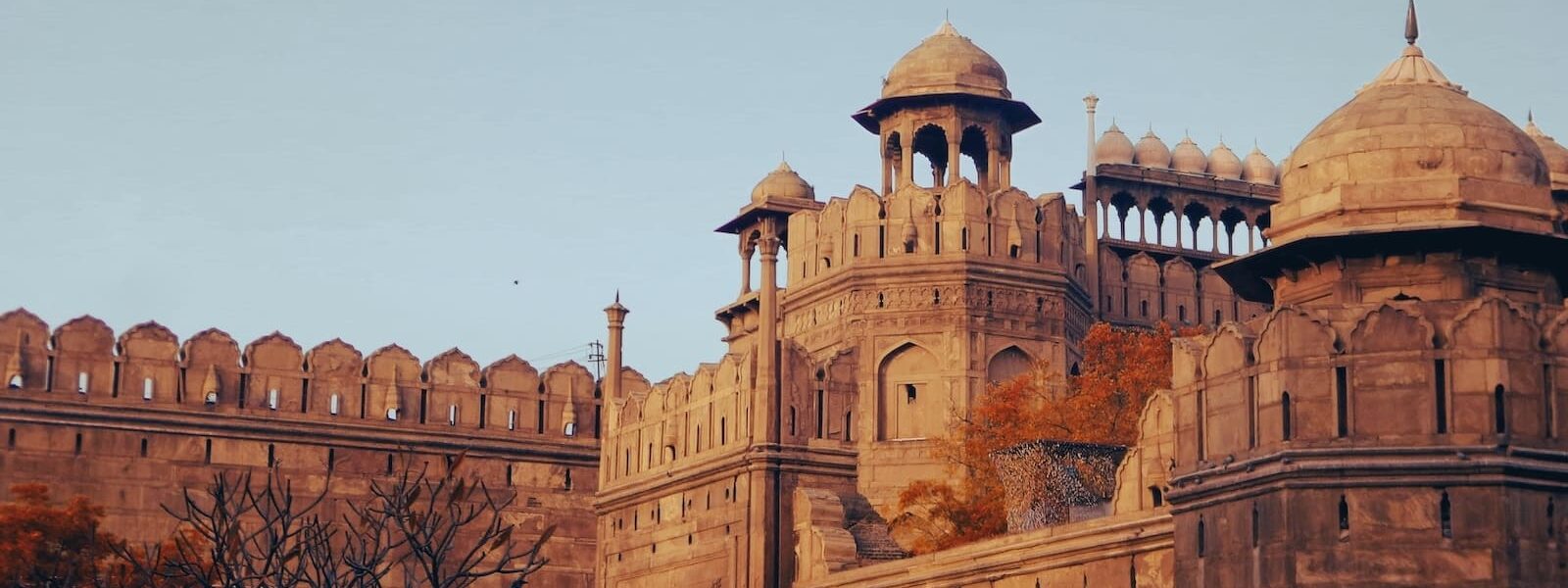
The scars of 1857 remain visible in stone: in the cleared spaces around Delhi’s Red Fort, in the bullet-marked walls of Lucknow, in forts that briefly promised alternative futures.
Led by Dr Robert Lyman, this journey considers how memory diverges – “mutiny” in one tradition, “war of independence” in another – and why 1857 still matters. Rob will be accompanied by expert local guides in Delhi and Lucknow.
As with all of Sampan’s tours, Rebels at the Red Fort aims to go deeper under the surface than rival itineraries. In addition to looking at the history, through a programme of guest speakers we will show how the causes and consequences of 1857 are still debated today. We shall stay in glorious and characterful properties throughout, and explore the exquisite cuisine of North India. We hope you can join us.

Robert Lyman is a British historian and author whose work explores the human and political dimensions of empire. Although widely known for his studies of twentieth-century conflict, his interests range more broadly across Britain’s imperial experience, particularly in South Asia. His writing is marked by a careful use of primary sources – letters, memoirs, regimental records – and a willingness to interrogate both British and Indian perspectives.
Rob is especially attentive to the individuals caught within larger structures of power: soldiers negotiating loyalty, administrators balancing reform and control, and rulers confronting annexation. Rather than treating imperial history as a sequence of campaigns, he examines how authority was asserted, resisted and remembered. His approach avoids easy moralising; instead, he seeks to understand the motivations, fears and assumptions that shaped decisions on all sides.
A former British Army officer, Rob brings to his historical work an understanding of military culture and institutional thinking, without reducing events to purely strategic terms. His lectures are known for their clarity and balance, situating dramatic episodes – such as the upheavals of 1857 – within longer political and social continuities.
Rob leads Sampan’s Forgotten War Tour and our Beyond the Chindwin tour, and has worked with Sampan since 2020.
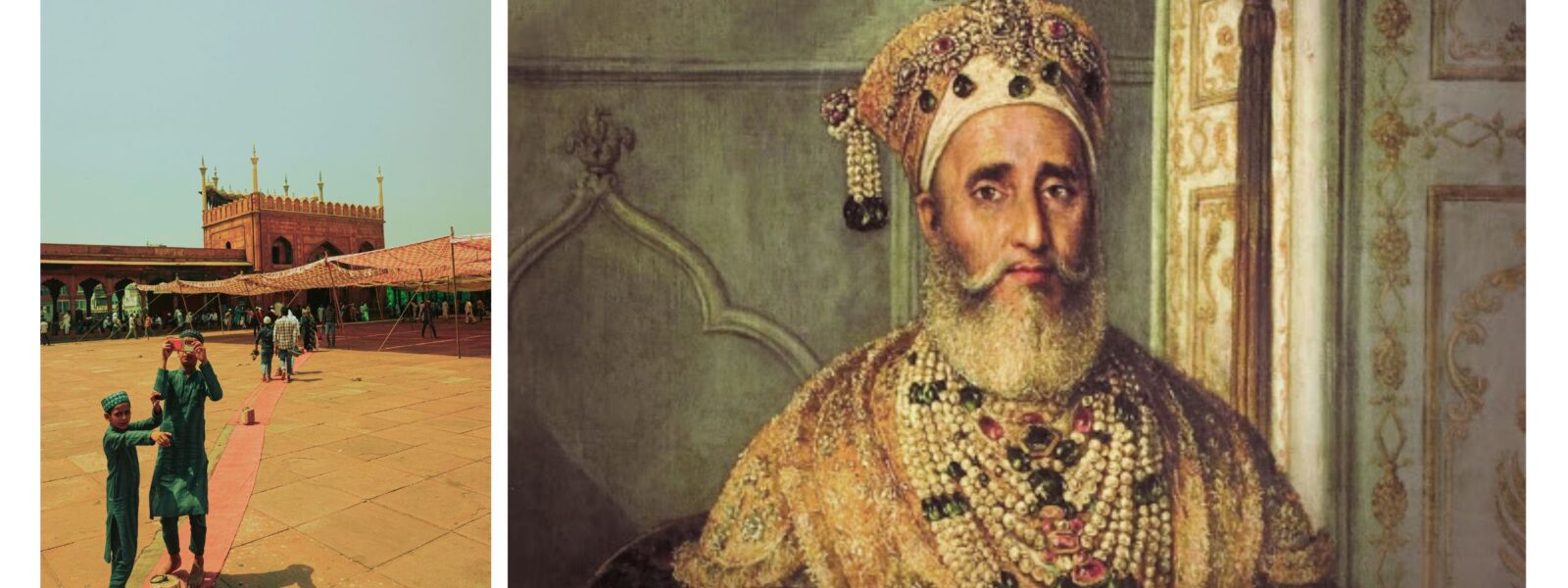
In the years before 1857, Delhi existed in a state of fragile composure – a city where political authority had ebbed, yet cultural life remained intensely alive. Within the fading orbit of the Mughal court, the emperor Bahadur Shah Zafar presided less as a ruler than as a patron of refinement. His court drew poets, scholars and calligraphers into a world where language itself was the highest currency.
Figures such as Mirza Ghalib shaped an atmosphere in which wit and artistry were prized above all. Yet this cultivated calm unfolded alongside a steady erosion of power. As William Dalrymple observes, “While the British progressively took over more and more of the Mughal Emperor’s power … the court busied itself in the obsessive pursuit of […] the most perfect Urdu couplet.”
In the early nineteenth century, relations between Britons and Indians were more fluid than they would soon become. The so-called “White Mughals” – British officials who adopted aspects of Indian culture, language and even family life – reflected a world in which boundaries were more permeable. That world was receding. As Dalrymple writes, “It was not the British per se, so much as specific groups with a specific imperial agenda – namely the Evangelicals and Utilitarians – who ushered in the most obnoxious phase of colonialism, a change which adversely affected the White Mughals as much as it did the Great Mughals.”
By the 1850s, the easy working relationship between Indian and Briton had begun to fray. Sepoys in the service of the East India Company had once known officers who spoke their languages and understood their customs. That familiarity thinned. As sepoy Sitaram Pandey recalled, officers had become distant: “One sahib told us he never knew what to say to us. The sahibs always knew what to say, and how to say it, when I was a young soldier.”
Into this atmosphere came the controversy over the new Enfield rifle cartridges, rumoured to be greased with beef and pork fat. This was seen at best to display British disregard for Indian beliefs; at worst, it was regarded as an attempt by the British to trample on Indian caste and convert them to Christianity.
In March 1857, sepoy Mangal Pandey attacked his officers at Barrackpore, near Calcutta; in May, sepoys at Meerut rose and marched to Delhi. The uprising quickly spread across north India.
The early days were chaotic and brutal. European civilians were killed, and with them any remaining restraint. The most infamous scenes of violence on the part of the rebels to places in Cawnpore (Kanpur), where a besieged British garrison agreed to surrender in return for safe passage. At Satichaura Ghat, as the evacuees boarded boats, the vessels were set alight and firing broke out. Amid the chaos, Saul David records how “a four-year-old child was bayoneted to death” and another infant was thrown into the river.
Those who survived – largely women and children – were taken prisoner before being massacred by butchers days later. Their bodies were disposed of in a well, in scenes of extraordinary brutality. As David recounts, a few victims still alive were forced towards it: “the three little boys… were running hysterically round the well… [and] tossed… over the parapet… the six were buried alive in a mountain of naked corpses.”
The events at Kanpur became one of the most shocking episodes of 1857, shaping British responses in the months that followed.
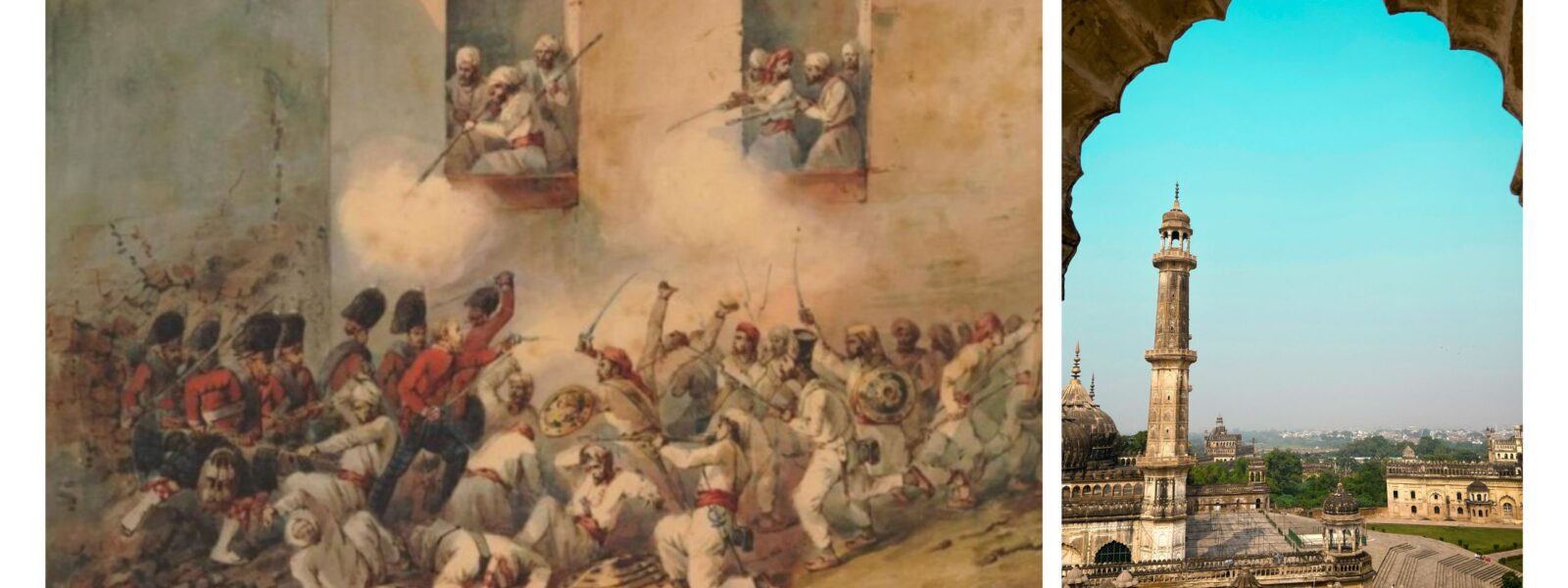
As the uprising spread, it took on different meanings in different places. At the Lucknow Residency, civilians and soldiers endured months of siege — bombardment, disease and dwindling supplies. Diaries from the siege tell of families crowded into cellars and the constant awareness that the walls might not hold. Leadership on the rebel side coalesced around Begum Hazrat Mahal, who sought to restore her son to the throne and gave political shape to what might otherwise have remained a fragmented uprising.
Elsewhere, the rebellion produced figures whose legacy would outlast the conflict itself. Among them, Rani Lakshmibai of Jhansi stands apart. Widowed and without a biological heir, she saw her kingdom annexed under the Doctrine of Lapse – a legal decision that became, in 1857, a question of sovereignty. From Jhansi Fort, she organised the defence of her city with a composure noted even by her enemies. Her subsequent escape and alliance with other rebel leaders transformed her into a wider symbol of resistance. In June 1858, near Gwalior, she was killed in battle – an end that helped secure her place in both history and legend.
By then, the balance had decisively shifted. As British forces reasserted control – first in Delhi, then across the Gangetic plain – victory was accompanied by a campaign of retribution. Villages were burned, suspected rebels executed and punishments inflicted with brutality. As Dalrymple recounts, men were forced into acts designed to destroy caste before death; others were sewn into pigskins and hanged, while burial and cremation rites were deliberately inverted. The British came to believe that the violence of the uprising absolved them of restraint: “In the eyes of Victorian Envagelicals, mass murder was no longer mass murder, but instead had become divine vengeance.”
In 1858, the East India Company was abolished and authority passed directly to the Crown, inaugurating what became known as the British Raj. While some see this transfer of power as a marked shift in tone for the worse – a shift towards greater distance, tighter control, and a more guarded imperial state – others believe that the dissolution of the Company led to more accountable rule under the eye of the Crown. Either way, the time of the Great Mughals – and that of the White Mughals – was decisively over.
For more in-depth coverage of the events of 1857, we recommend Eva Chatterji’s Mutiny Reflections and the Empire Podcast’s 8-part series.
On 1 October 1878, at the age of 19, Burma’s last king ascended to the throne in Mandalay. King Thibaw initiated his reign by tying in velvet eighty of his family members – and thus rivals to the throne – and clubbing them to death while a court orchestra played loudly so to cover the sounds of their screams.
The British, at this time ruling Lower Burma from Rangoon, jumped on this opportunity to use the barbarism of the Burmese monarch as an excuse to wage the Third Anglo-Burmese War. It lasted less than a month. Taken from Mandalay Palace down to the Irrawaddy River in a bullock cart, the last King of Burma was exiled to the town of Ratnigiri on the coast of India, never to return to his homeland.
Thirty years before, another toppled king had been exiled from his city, also in a bullock cart, and sent in the other direction.
At 4AM on October 7th 1858, Bahadur Shah Zafar II, the last of the Great Mughals, was escorted from the city of Delhi to live out his final days in Rangoon. At the close of the great Indian uprising, while the blood of almost all the men and boys of Delhi still soaked the streets, Shah Zafar was sentence with charges of attempting to instigate a global Muslim jihad; a misleading and grossly simplistic narrative which nonetheless appealed to the ignorant and jingoistic.
Shah Zafar was exiled to Rangoon and less than a decade later, separated from everything he loved, died on November 7th 1862. The well-oiled machinery of the British Empire quickly swung into action to ensure that the passing of the Last Mughal was as uneventful as possible.
As the British Commissioner in Burma wrote to London at the time:
“A bamboo fence surrounds the grave for some considerable distance, and by the time the fence is worn out, the grass will again have properly covered the spot, and no vestige will remain to distinguish where the last of the Great Moghuls rests.”
Indeed, it was not until 1991, when by chance workmen digging a drain found a brick-lined grave and within it the intact skeleton of the Last Mughal. Now a shrine, despite being only a short walk from Shwedagon Pagoda, the resting place of the last Mughal is rarely visited by those not from the sub-continent.
This is a shame, for as Dalrymple writes, Shah Zafar remains,
“… an attractive symbol of Islamic civilisation at its most tolerant and pluralistic.”

Dr Robert Lyman traces Bill Slim in Burma, and how WW2 led to where Myanmar is today.

A literary journey on the River Hooghly with Sam Dalrymple & Nilanjana Roy.
From Jaipur Literature Festival to India’s eastern coast, with Abir Mukherjee & friends.
