Subscribe to our mailing list
We are still here! Let us send you tips for travelling through Myanmar and stories from the road …

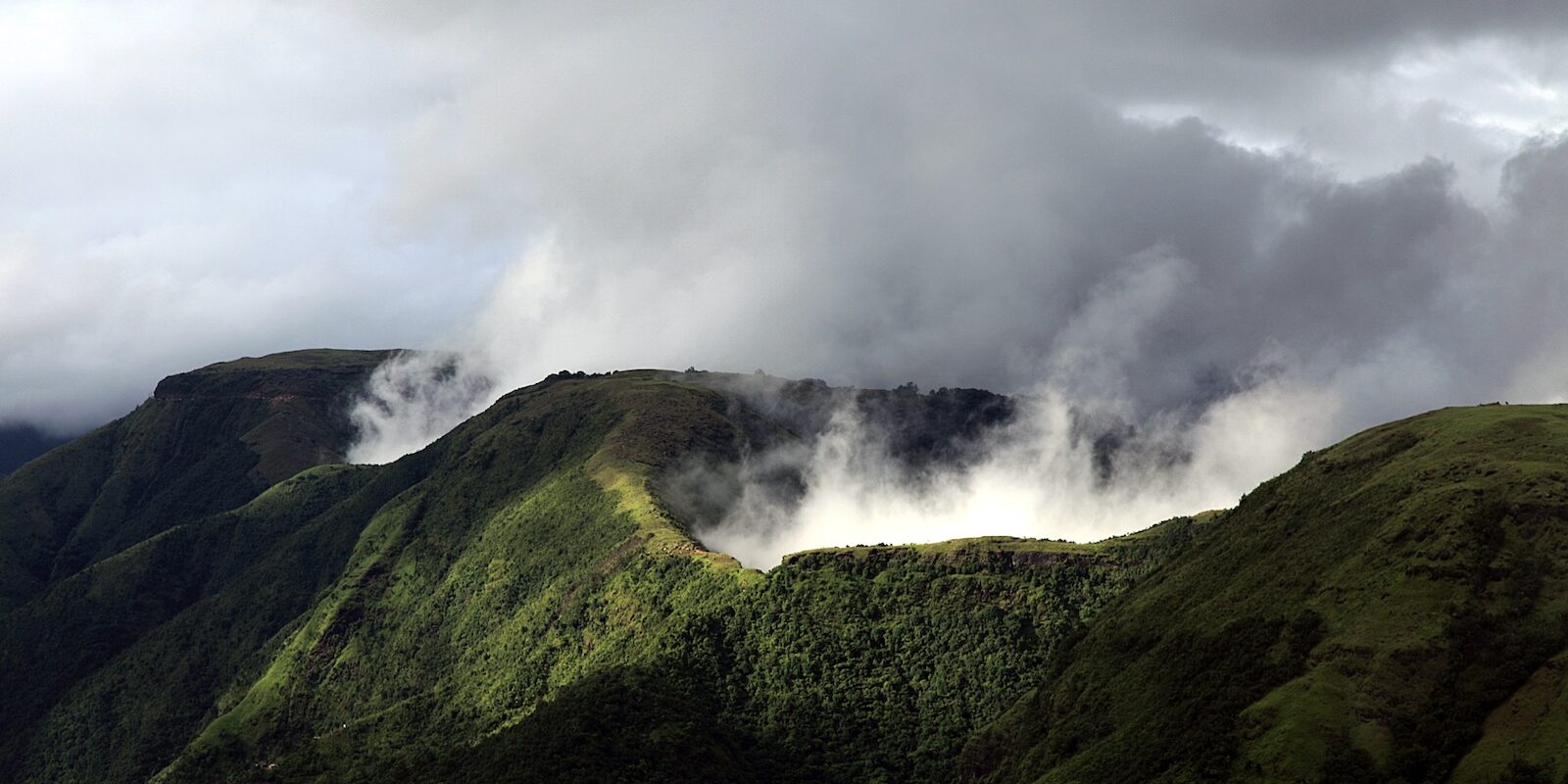
“Meghalaya’s clouds [parted] to reveal a lovely perspective of rolling highland country embellished by dense copses, shadowy clearings and white-water streams plunging along so vigorously we could almost hear them. We could almost smell the wildflowers too. We were flying over an abandoned, overgrown garden, and it wasn’t hard to imagine a seed planted at dawn blooming before dusk.”
Meghalaya is commonly regarded as one of the wettest places on earth. This amount of rain gives a vitality to the landscape, described by writer Frater as “wild, vibrant, primeval viridescence almost colouring the undersides of the clouds.”
Cherrapunji (aka Sohra), as well as the hill station of Shillong to the north, state-capital and referred to as “Scotland of the East”, are ideal jumping off points to explore Meghalaya’s deep forests, multiple waterfalls and “living root bridges.” Shillong is the centre of music in the north east. Live music is common. Expect to hear locals on stage crooning “Sweet Home Meghalaya” and other favourite ballads with a twist.

The central belt of Meghalay is made-up of the Khasis Hills. The Khasis hold the distinction of being one of the few remaining matriarchal tribes of the world. Khasi oral history says that this came from the days when Khasi men were frequently fighting and dying on the plains of battle. They left behind children to be brought up by mothers who took new husbands, leading to uncertainty over their paternity.
Khasi historian Amena Nora Passah writes:
“Society might have labelled those children ‘illegitimate’. At some point, our ancestors thought that they didn’t want this slur. So, they decided that children should have one last name: the mother’s.”
As a matriarchy, wealth passes from mothers to their daughters. Daughters have the liberty to live in their ancestral home or move. Except for the youngest daughter, who is the custodian of the property. Even after her marriage, she never leaves. She looks after her parents and eventually becomes head of the household.
Nestled amidst the verdant East Khasi Hills is the village of Kongthong. Civilisation is sparse in these parts, and the village is surrounded by magnificent high ridges and dizzyingly deep gorges. It’s also home to a unique tradition called jingrwai iawbei, which has been flourishing here for centuries. According to this tradition, each newborn in Kongthong is assigned both a regular name and a distinct melodious tune at birth by their mother.
“It is an expression of a mother’s unbridled love and joy at the birth of her child. It’s like a mother’s heart song, full of tenderness, almost like a lullaby,”
While their name is only used for official purposes, this tune becomes their identity to which they respond throughout their lives. Once a person dies, their tune dies with them, never to be repeated for anyone else ever.

Hiking through the Naga Hills, in the footsteps of Naga soldiers, with Charlotte Carty.

A literary journey through Bengal & Assam with best-selling author Abir Mukherjee.

Dr Robert Lyman explores the events of WW2 in Kolkata, Kohima and the Naga Hills.
