Subscribe to our mailing list
We are still here! Let us send you tips for travelling through Myanmar and stories from the road …

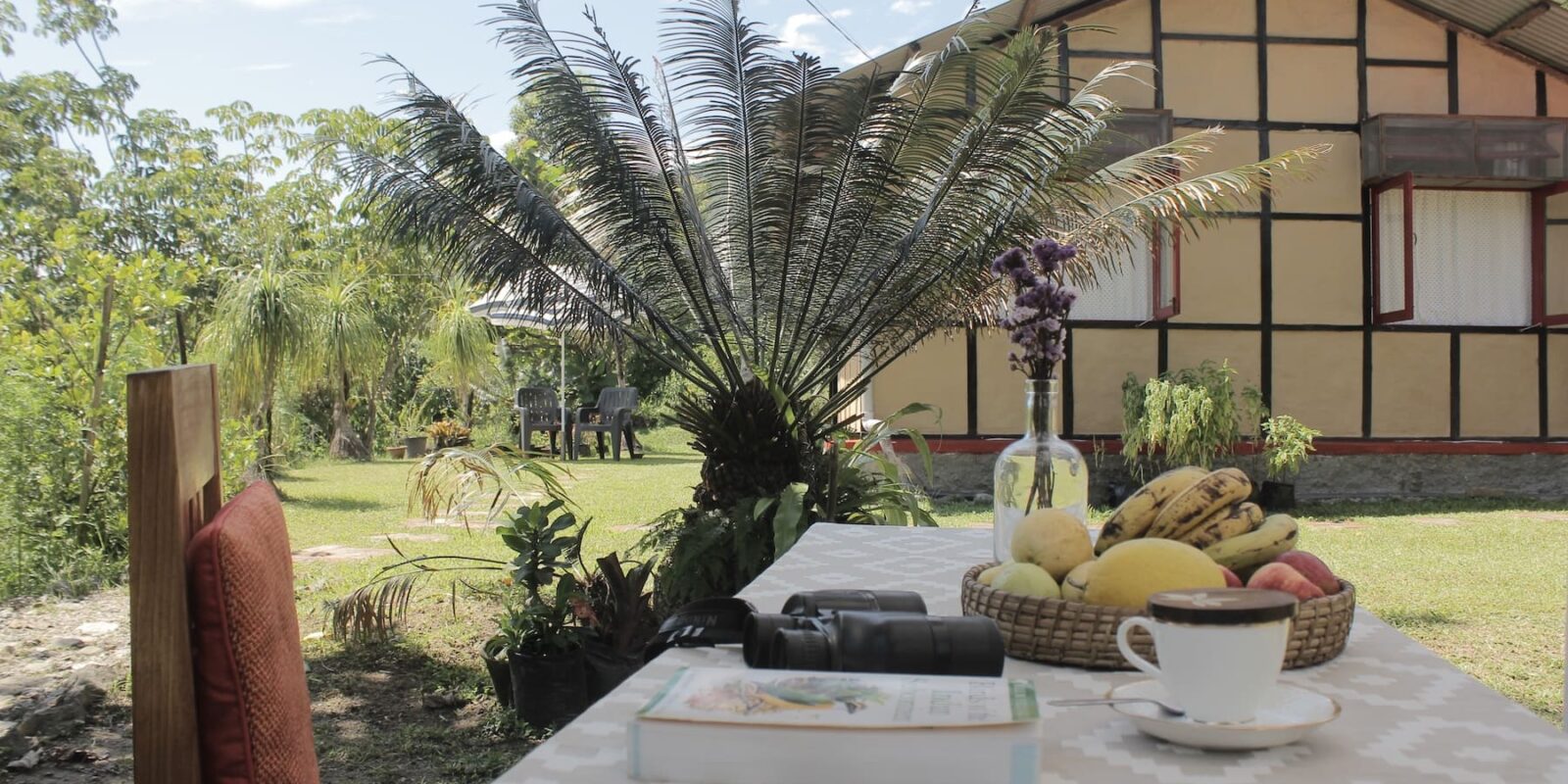
The inspiration for the cottages derives from traditional architectural styles using natural materials to perfectly blend into the rural landscape. Although the exteriors are rustic, the interiors of the rooms are comfortable and chic. You can expect soft mattresses and hot, powerful showers!
FLASH POINT: Chef Sanjay is a gem and creates magic in the kitchen. You can expect surprisingly delights at each meal: from fluffy Tingmo Tibetan bread at supper to buckwheat rotis with omelette and pickle in the mornings. This accompanied by strong black coffee and – of course! – the finest Darjeeling tea.
Room, fields and thali at PaliGhar
Founders Kabir and Ahana worked in upmarket tourism for many years, before deciding they wanted to create something more rustic and local. Kabir’s family’s ancestral land back home had long been used for farming, but like much of the region, depopulation and migration to towns and cities meant fields were slowly being reclaimed by jungle.
PaliGhar grew from a desire to use their experience in travel while reconnecting with their own roots. The idea was simple but ambitious: to create a place to stay that celebrates local flavours, architecture, food and everyday life. Kabir continues to act as Chief Guide and experience creator, while Ahana is the hostess and menu-curator (when she is not dabbling in the garden!).
The lodge has grown slowly and carefully. There has been no rush to build lots of rooms, and any future expansion is likely to be limited to just one or two more.
PaliGhar is, first and foremost, a farm. Much of what is served comes directly from its own garden, with the rest sourced from within a roughly 20km radius. The kitchen specialises in Nepalese cuisine, showcasing the flavours of the Himalayan belt, but also drawing on Tibetan, Bhutia and Chinese influences that Kabir grew up with.
A highlight is the Nepali thali, built around whatever is growing in the garden at the time: mustard greens, squash, squash root, bamboo shoots, and other seasonal produce, alongside chicken or buffalo prepared in a Nepalese style. The menu changes naturally with the seasons and the harvest.
Breakfast alternates between European, Indian and Nepalese options, always accompanied by Darjeeling tea and good filter coffee. The emphasis is on freshness, simplicity and food that reflects the landscape and its communities.
Guests at PaliGhar tend to range from their 50s to 70s, travelling as individuals or couples, alongside young families keen to introduce their children to nature and the outdoors. Some come simply for the peace and quiet and the chance to switch off, while others are more active, using PaliGhar as a base for walking and exploring the surrounding countryside.
There are also guests who arrive specifically for the food, curious about local Himalayan flavours and home-grown produce. Others are drawn by the opportunity to meet people from the community and learn more about life in this part of the hills. Birders, too, find the area rewarding, with the mix of forest, farmland and open spaces attracting a wide variety of species.
What unites most visitors is a desire for something slower and more grounded: time, space, good food and a sense of connection to where they are staying.
PaliGhar lies around 10 km from Kalimpong, in a mixed community where the majority are from the Brahmin community, alongside a few households of Lepcha and other indigenous groups. The immediate next-door neighbour is a monastic centre, adding to the quiet, contemplative atmosphere of the area.
Most people in the neighbourhood are involved in farming, raising their own cattle and goats and growing much of what they need. Guests quickly notice the rhythms of rural hill life: early mornings, shared work, and a strong sense of community. Staying at PaliGhar offers not just countryside views, but a window into how people live and work in this part of the eastern Himalaya.
PaliGhar works to minimise plastic consumption at source and to keep its footprint as light as possible. A large proportion of the food served is grown on site, and when this is not sufficient, produce and spices are bought directly from neighbouring farms, keeping money within the local community.
PaliGhar strives to restore the land upon which it sits to a more dynamic and living system. In his own words, Kabir says: “For over 80 years, the farmland was used continuously for rice cultivation, which gradually depleted the soil. Our vision was to revive the land organically. Through years of mulching, crop rotation, and the use of manure and leaf compost to nourish the soil, the land has slowly regenerated.”
Today, PaliGhar is home to more than 50 varieties of plants, flowers, fruits, and vegetables, and supports a rich diversity of bird and insect life.

An immaculately restored 1920s townhouse. A love-letter to the city.
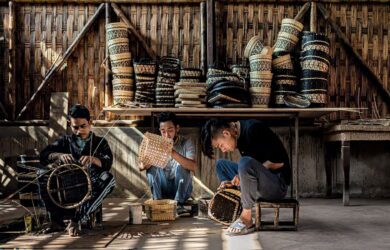
A cultural space preserving Naga textiles, craft and cuisine.
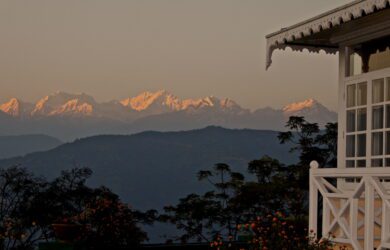
A lovingly restored planter’s bungalow overlooking the hills of Tukdah near to Darjeeling.
