
Subscribe to our mailing list
We are still here! Let us send you tips for travelling through Myanmar and stories from the road …

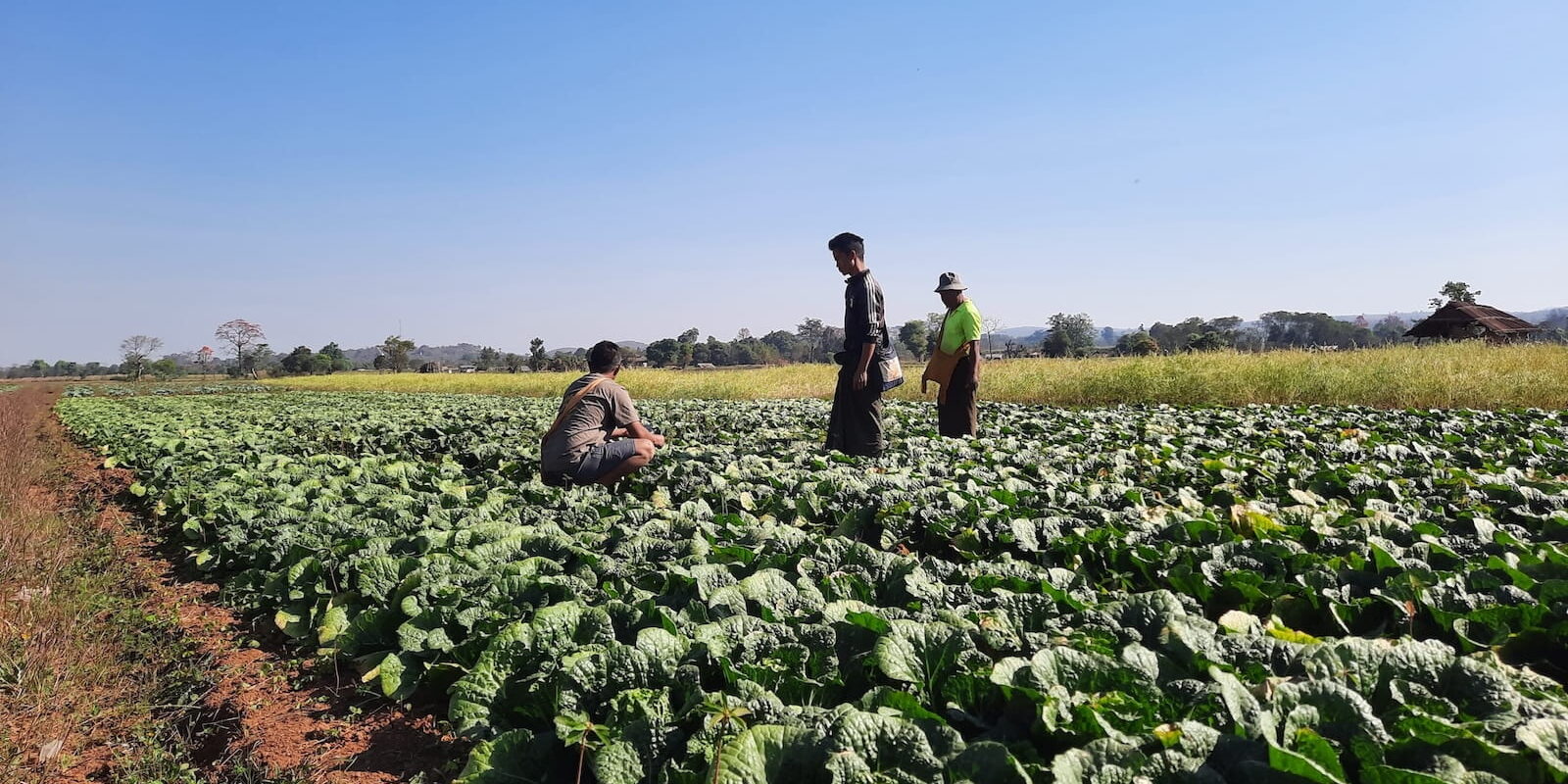
“Thit, Hnit, Thong …”
U Robert counts each one. Five in total. We looked up at him expectantly. His face is inscrutable, perhaps a hint of disappointment.
“When I was young and we ploughed the land, the soil was so full of worms …”
We were at Nay Kyar Farm in Hmawbi, a rural district northwest of Yangon, Myanmar’s commercial capital. U Robert is our host, along with his daughter Khu Pawe. Khu Pawe is, like her father, a keen farmer. Her husband too, has a farm, a short drive away. We had been welcomed warmly with green tea and sticky-rice wrapped in banana leaf. Somewhere around our knees is Khu Pawe’s three-year old son Rocket (“Rocky”), while in her arms sleeps Rosemary (“Rosie”).
At Nay Kyar farm, a love for nature runs in the family.
As is often the case in Myanmar, broad smiles and generous hospitality can give the false impression that we have entered a rural idyll. Actually, life is hard for farmers in Myanmar.
Approximately 70 per cent of Myanmar’s population live in rural areas and agriculture is one of the country’s largest sources of livelihoods and employment. Most farms are small, family-owned farms of about five acres. Myanmar contains some of Southeast Asia’s richest biodiversity, with farming systems ranging from rice-growing deltas, dryland, mountain and tropical perennial crops.
Farmers in Myanmar face challenges on several fronts: skyrocketing input costs and a heavy reliance on imported fuel and fertilizer leaves farmers vulnerable to supply chain shocks. This is coupled with extreme climate vulnerability after decades of chemical degradation.
These challenges are heaped upon a country that is already suffering under severe food insecurity, largely due to internal conflict. In Myanmar, an estimated 8.5 million people are facing acute hunger and severe nutrient deficiency.
At Nay Kyar Farm, U Robert and Khu Pawe mainly grow rice paddy. In the past, they would save seeds for replanting. However increased flooding in recent years has meant they have had to dramatically draw from their emergency stock, leaving almost nothing left. Buying seeds from the government is not cheap. Buying from the village supplies is four times less expensive, but germination is much lower.
For Myanmar farmers, climate change is not a threat on the horizon. It is a challenge they are already facing today.

Some farmers in Myanmar are keen environmentalists. Most wouldn’t use that word, but they are outside each day and whether or not they are tracking the data, they can tell that something is wrong: yields are down, crops are less tasty, and people are getting sicker. These farmers want to be more resilient and more self-sufficient. Their communities need better food, and more of it.
The team at Kokkoya Organics – an urban farm operating in Yangon for just under a decade – are convinced that healthier soil could be a solution to many of the problems that Myanmar farmers face.
“Soil”, they tell us, “is the living foundation of food, water and community well-being. When soil functions improve, farms can become more productive, input costs decline and farmers gain greater control over their systems.”
Soil is much more than dirt beneath our feet. It is a living ecosystem that supports plants, stores and filters water, cycles nutrients and provides a home for billions of microorganisms. Healthy soil is fundamental to productive agriculture, biodiversity, environmental sustainability and food security.
Healthy soils support strong root growth and nutrient cycling, retain more water and resist erosion, helping crops withstand drought and flooding. They also support the bacteria, fungi, earthworms and other organisms that break down organic matter and make nutrients available to plants. As a result, healthy soil can reduce reliance on synthetic fertilisers and improve agricultural productivity.
For this reason, Kokkoya set up the Healthy Soil Movement. Farmers who join the network are initiated with a 5-day online course in soil health. A lab soil test is conducted and then repeated on an annual basis. The farmers are provided with a soil test toolkit where they can test their soil and upload their data to the Movement’s Soil App. This data is aggregated across the Movement’s network on a dashboard and discussed in peer-group sessions and during consultations with Kokkoya. A monthly stipend of USD ~40 is provided to all farmers on the network, and soil grants are also available.
Sampan travelled with Caity – who leads the Movement – and Sophia – the chief Co-ordinator – to visit the farm of U Robert and Khu Pawe to see how the farmers collect their own data.
Data collection is the core of the movement. Farmers are asked to carry out these tests each month (taking no longer than 30 minutes), tracking six data points testing soil health:
The six simple field tests allow farmers to track soil health in real time without reliance on laboratories and expensive equipment. Data can be uploaded to the Soil App even when offline – vital in Myanmar where internet connection is sporadic. This data is aggregated and published on the Movement’s webpage. The data is available for all to see, which means that farmers can observe how their peers are progressing.
“However,” Caity tells us, “improving soil is not a straight line. Every farm is different, and change happens slowly through small experiments and observations, seasons by season and test by test. It is not about comparing the farms to each other, but about looking at the progression of each farm as they work to improve their soil health.
“The important thing is that this is their own data. They can track their own improvement.”
At Nay Kya Farm, we watch as Khu Pawe and her father U Robert carry out the tests.
The Worm Count comes first. U Robert roughly marks out a square foot in the field and digs down about a foot, lifting the soil onto a tarp. Each worm is placed to one side, then counted and recorded in the app.
Lots of worms is a good sign. Their castings act as a natural fertiliser, their tunnels help rainwater penetrate deeper into the soil, and their presence supports countless microorganisms. But there is not one single figure that determines healthy soil, as worm counts depend as much upon the wider region of where the farm is located, than just the health of the soil. So the worm count is simply a snapshot of one place at one moment. Repeated over years, however, it begins to reveal patterns, showing seasonal changes and how farming practices affect life in the soil.
Infiltration of water is tested by pouring a certain amount of water into a pipe and timing how long it takes to seep through. Steady infiltration indicates healthy soil with good organic matter and stable clumps that lets water soak in quickly, reducing flood risk and drought stress.
Structure is tested by placing a clump of soil in a glass of water and seeing how well it holds together. This shows soils aggregate stability and resistance to erosion. Root Depth reflects soil structure compaction and nutrient access. Rhizosheath indicates root microbe interaction.
Caity enlightens us more on the importance of roots:
“Plants are not simply taking nutrients from the soil; they are actively farming the bacteria around their roots. Their roots release nutrients that attract bacteria, which in turn help make other nutrients available to the plant. It is a remarkable underground partnership, with plants effectively feeding the microbes that help feed them.”
The final metric is Brix: a simple on-site test that measures the sugar content in plant sap, indicating how efficiently a plant is photosynthesizing and taking up nutrients. This is tested by peering at a sample through a refractometer. A result of 14 per cent sugar means that there are no “pests”. Because, as we learn on the farm, a plant that is healthy does not attract pests.
One farmer of the Movement that consistently records high Brix is Hnin Nwe Soe, who grows pigeon pea, chia seeds and sunflower in Shan State. Her soils lab analysis also had the highest organic matter reading of all the pilot farms. This lab test measures the amount of carbon-rich material in the soil, indicating overall soil health, fertility and water-holding capacity. The average across Asia is 1-2 per cent. Hnin Nwe Soe’s scored 8.38 per cent! After a recent visit to her farm, Kokkoya describes her soil as “soft, spongy and humming underneath our toes.”
“The whole space around the farm felt nourishing, if this was where we lived and the soil we ate from, we too would feel healthier and renewed.”
And this all has a real affect on Hnin Nwe Soe’s livelihood. She says to Kokkoya:
“With the Healthy Soil dashboard, I [could] show buyers detailed records of how I grew my chia organically. After seeing the records, the buyer purchased all my chia seeds at a fair price.”
It is a different story in other parts of the country.
Several farmers in the network are from Myanmar’s Anyar region, the Central Dry Zone (CDZ) where Bagan is located. About a quarter of the country’s population lives here, with nearly 80 per cent dependent on agriculture for their livelihoods, mainly sesame, peanuts, pigeon pea and other legumes. But farming in Anyar is particularly challenging. Its semi-arid climate, combined with decades of intensive cultivation, has depleted soil fertility and contributed to erosion. Today, the CDZ is one of Myanmar’s regions most vulnerable to food insecurity and climate change.
When Kokkoya first analysed soil samples from farmers in Magway through the Healthy Soil Movement, they recorded some of the lowest organic matter levels across the network. Yet these farmers are also among the most enthusiastic and determined when it comes to restoring their soil.
U Thaung Wai grows sesame and peanuts on several acres outside his village and is one of the Movement’s most active participants. He experiments with homemade compost and natural bio-inputs, while his herd of oxen provides both farm labour and valuable manure. He first noticed the degradation of his soil after years of chemical inputs and topsoil erosion, and in 2012 began attending every organic farming training and class he could find.
Changing long-held farming practices, however, is never simple. Some neighbours initially saw him as “the crazy old man trying strange methods”, while many farmers worry that moving away from chemical inputs will reduce yields, particularly during the transition. Fluctuating prices for sesame and peanuts add another layer of risk.
U Thaung Wai says to Kokkoya:
“Lately, farmers have been using more chemical inputs and going more into debt. Farmers are also needing to use stronger and stronger fertilisers to get results. For me though, I have been exploring natural farming strategies since 2012. Since then, it is remarkable how much more profitable I am compared to other farmers. I have better profit and an easier life.”
Since 2018, U Thaung Wai has supplied his peanuts and sesame to Organic Roots Myanmar, which turns them into peanut butter and tahini. By creating value-added products and connecting farmers to wider markets, Roots helps provide better and more stable prices. For farmers like U Thaung Wai, this means the effort invested in improving soil health brings an economic return.
Caity says:
“His relationship with Organic Roots shows how reliable markets and fair prices can reward farmers for the extra care they put into their farms. But opportunities like this are difficult to find in Myanmar, and they are not what first drove U Thaung Wai to farm organically. Recognising this, the Healthy Soil Movement does not rely on better markets to push the change. Instead, the movement focuses on finding and supporting “curious” farmers who are actively finding ways to improve their soil while making their farms more resilient and economically sustainable. We focus on supporting them and making their work visible. U Thaung Wai’s persistence may be one small step, but as his experience is shared from farmer to farmer, the impact ripples out.”
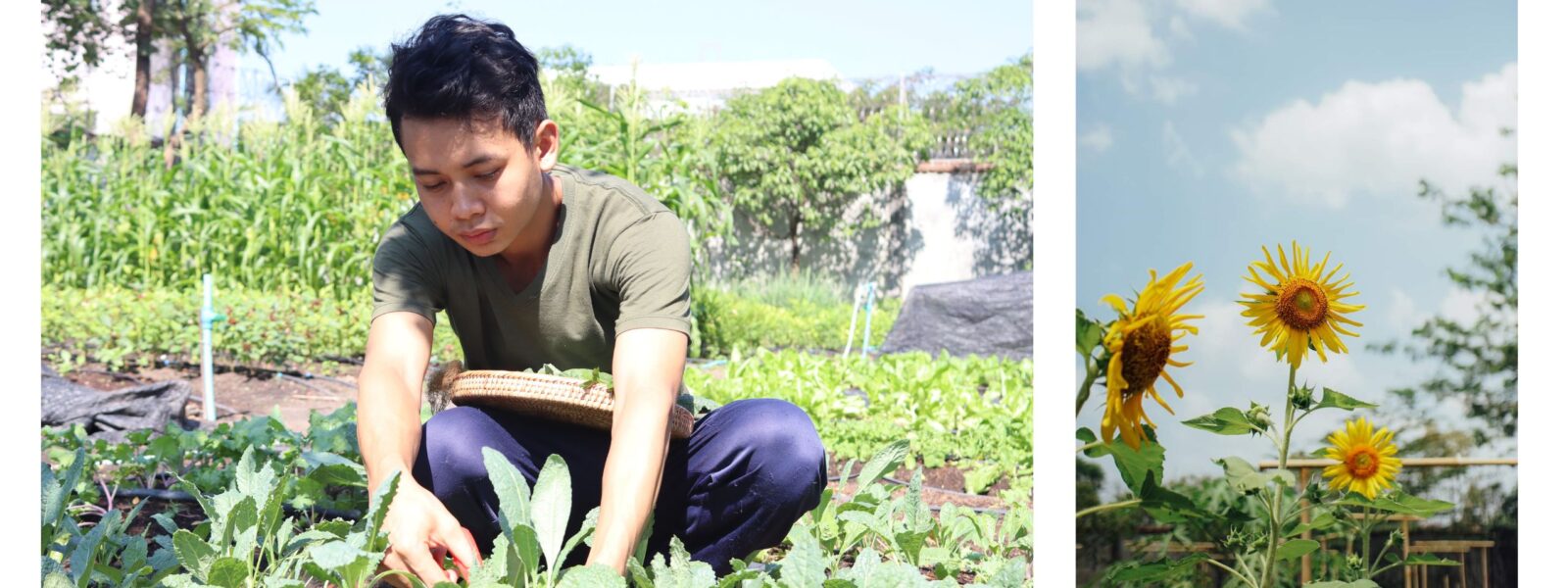
Soil health is not just a challenge for Myanmar; it is a global one. More than 60 per cent of agricultural soils in the EU are estimated to be degraded, as are around 40 per cent in the UK, while the UN Food and Agriculture Organization warns that 90 per cent of the world’s topsoil could be at risk by 2050. The consequences extend beyond agriculture, affecting food security, biodiversity, water quality, flood mitigation, climate resilience and greenhouse gas emissions. As soil ecologist Prof Richard Bardgett puts it, “Few things matter more to humans than their relationship with the soil.”
For farmers transitioning to regenerative practices, one of the biggest challenges is that yields can fall in the short term, even as lower input costs and premium prices can help maintain profitability. The approach is nevertheless gaining traction, with the UK’s intensive horticulture company G’s Fresh Ltd aiming to transition its entire operation to regenerative farming by 2030.
For Prof Duncan Cameron, a soil biologist at the University of Manchester, soil health should be far more than a peripheral environmental concern: it is “front and centre” in the fight against climate change and, he adds, a matter of national security.
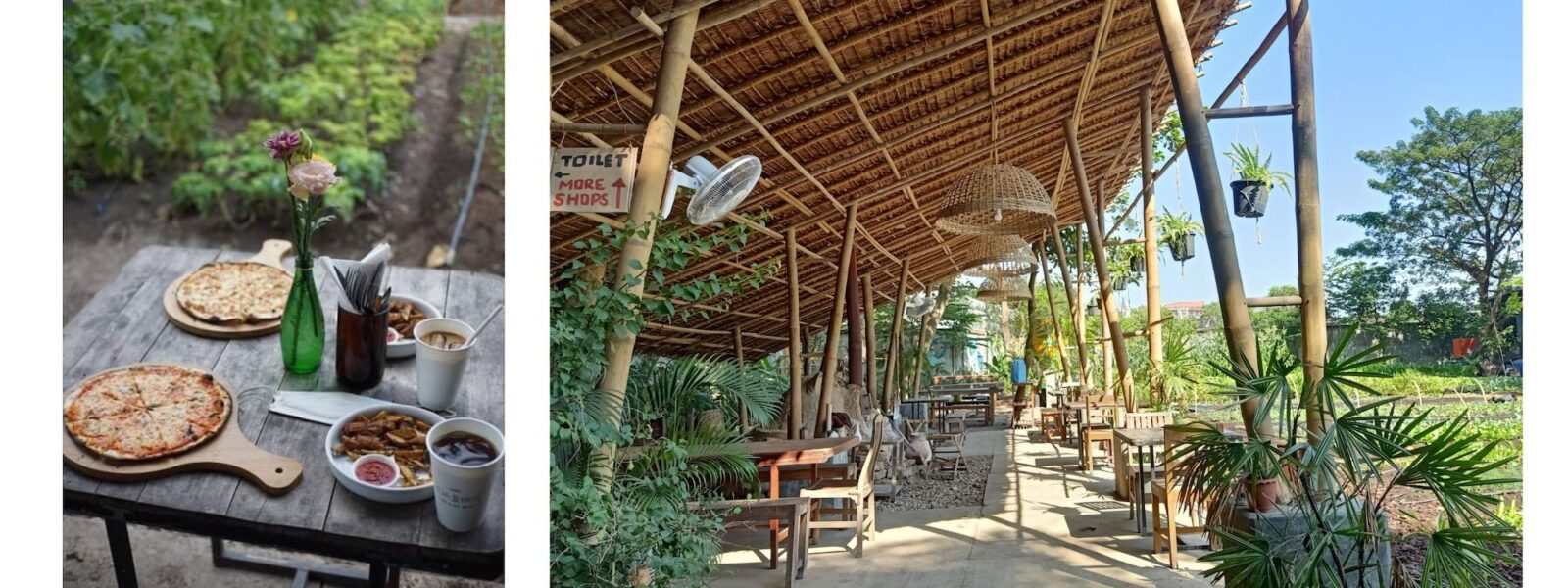
At the time of writing, 12 farms are part of Kokkoya’s Health Soil Movement network, encompassing 20 farmers looking after over 100 acres of land. They have recorded 1,823 field tests, 120 plant observations, 37 input-making practices and 38 biodiversity observations. To date, 952 worms have been counted!
The project’s pilot phase was funded via the Australian Government through the Direct Aid Program. The current phase, up until November 2026, is being funded by the Province of East Flanders, Belgium, through the Global Solidarity Service.
As of this month, the Movement has started taking “support a farmer” pledges from local businesses and individuals. (Sampan is currently considering becoming one of the first businesses to be a Healthy Soil Supporter …!)
Kokkoya believe that through the Movement, Myanmar’s farms will begin producing better yields, with greater resilience to floods and drought. Healthier soils could also help farmers build more profitable farms. Their neighbours will begin to ask: ‘What are you doing differently?’, and stronger communities will form around healthy soil.
Beyond the farms, the Movement hopes for soil health to expand into public consciousness, with customers, schools and NGOs following the journeys of their farmers through the Movement dashboard. Individuals and businesses can proudly support the Movement, as it becomes a recognised and trusted symbol of regeneration.
Caity says:
“Ultimately, success is a strong, farmer-led network in which knowledge is shared, decisions are made collectively and farmers themselves bring their neighbours into the movement, allowing healthy-soil communities to spread naturally across Myanmar.”
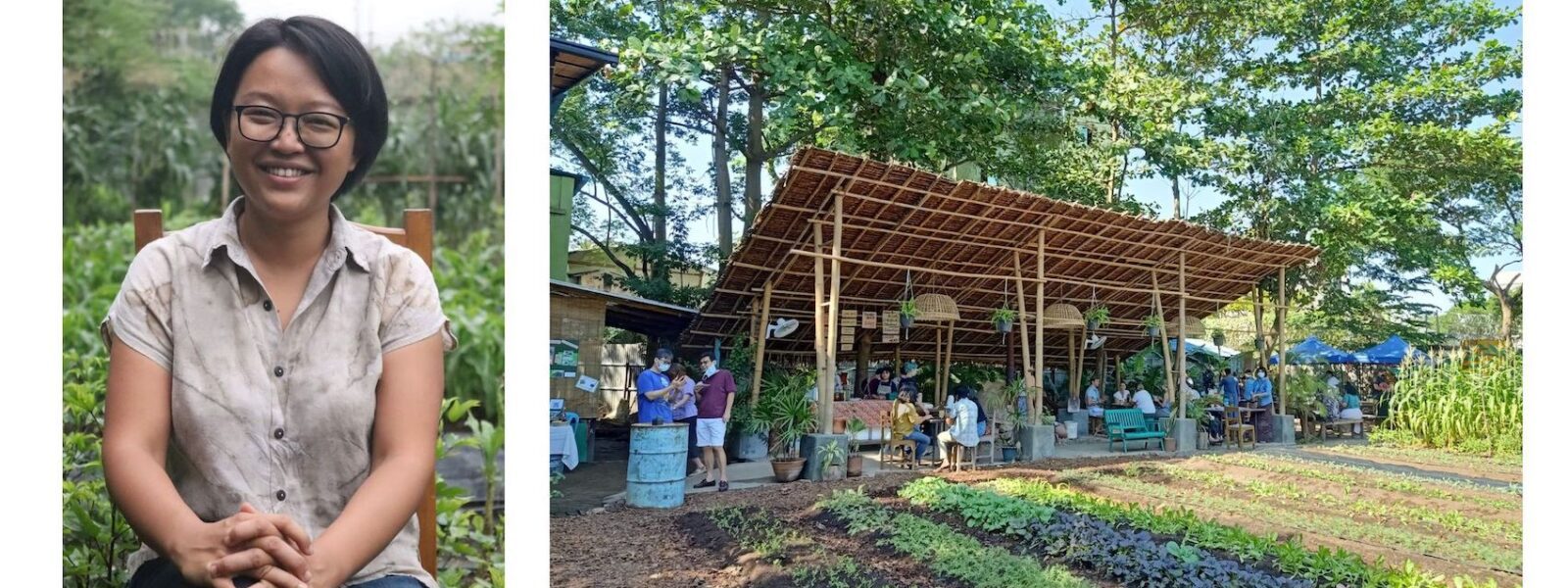
Back on Nay Kyar Farm, with the six tests completed and the data uploaded, we sat down to a lunch of duck eggs, papaya salad, grilled chicken and fried watercress. Khu Pawe tells us more about her experience as part of the Movement.
“Before I joined, I didn’t pay much attention to the soil. Now I’m more and more curious and constantly check the soil. I want my soil to be healthier. I check for worms and started noticing other life. My plants now have less pest problems than before. The soil health is better and so I have less pests.”
Kokkoya are keen to stress to us that this is not a one-time project they have built, but a network of lasting partnerships. They believe the Movement can help cut-off villages where every day costs are rising daily, and regular humanitarian access cannot go. They aim to help these farmers build resilience through restoring soil so that families can grow their own food and no longer be dependent on outside help to survive. And beyond that, they believe the Movement will support entire communities: when one farm thrives, they say, it lifts up neighbouring families who are being hit by Myanmar’s current crises.
Now more than ever, supporting Myanmar’s farmers is of vital importance.
According to Myanmar’s humanitarian needs and response plan 2026, an estimated 16.2 million people are in need of humanitarian assistance this year, with food among the top priorities.
“Myanmar’s food crisis is spiralling”, says Veronica Collins, EU humanitarian aid officer for Myanmar. She describes it as “one of the worst food crises in recent history”, adding that “the crisis is unfolding in plain sight, yet remains unnoticed by the world. The people of Myanmar are paying the price, leaving many with little to no means to live.”
It was a year ago that Sampan visited U Robert and Khu Pawe. Upon writing this article, we have checked back into the Movement dashboard to see the most recent results from Nay Kyar Farm. Fourteen worms counted in August 2026. “I saw a lot of guys” reads Khy Pawe’s proud remark next to the figure. It is her highest number ever since joining the Movement!
Fourteen happy worms in just one square foot of soil. Good news for U Robert and Khu Pawe. Good news for the farm, and for the soil. Which means, ultimately, good news for Myanmar.
If you would like to become a Healthy Soil Supporter please reach out to Kokkoya at hello@kokkoyaorganics.com

