Subscribe to our mailing list
We are still here! Let us send you tips for travelling through Myanmar and stories from the road …

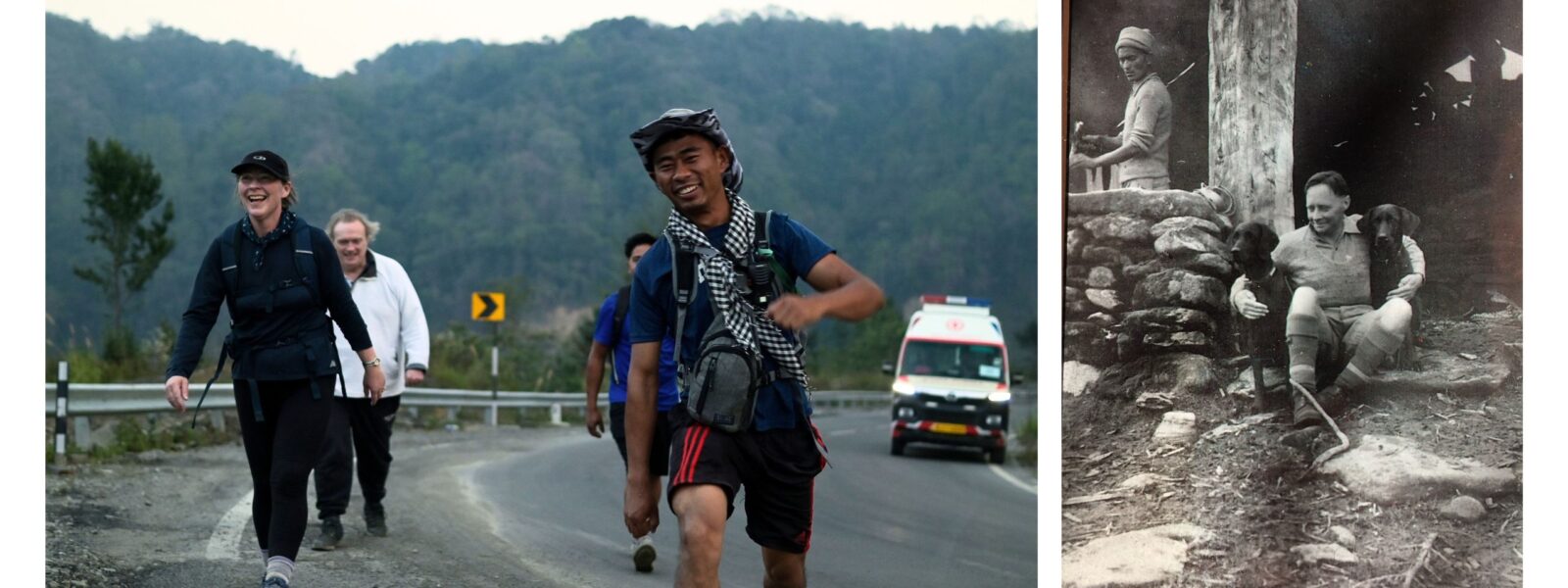
However, 80 years before, in 1944 during the Second World War, the scene had been quite different. Elements of the small battalion of the Assam Regiment, part of Slim’s Forgotten Army, had been fighting day and night since 28th March, at this very place, surrounded by a far superior force from Sato’s 31st Division who were advancing along the Somra Tracts towards Kohima, only to find this small Allied unit dug in, right in their path. My grandfather, Lieutenant Colonel William Felix (‘Bruno’) Brown, was the Commanding Officer of the 1st Battalion, Assam Regiment at the time.
An order to withdraw was eventually given to the Assam. At midnight on the night of 1/2 April they began to pull out towards Kohima. They then marched across 124 kilometres of Himalayan foothills, covering 5,300 metres of altitude change, non-stop, in just 39 hours to reach their destination. They arrived at what is now the iconic Commonwealth War Graves Commission’s (CWGC) Cemetery in Kohima at 3 pm on 3 April, just hours before the Japanese encircled the town. They fought hunger, thirst and exhaustion along the way. They battled Japanese ambushes and even had the indignity of being strafed by RAF friendly fire as they marched back to bolster the almost non-existent defences at Kohima.
How on earth did they do that? Is that something we could even do today, rested, unopposed and with all the new technology that 80 years of progress could provide? Who knew? But the only way to find out was to give it a try…
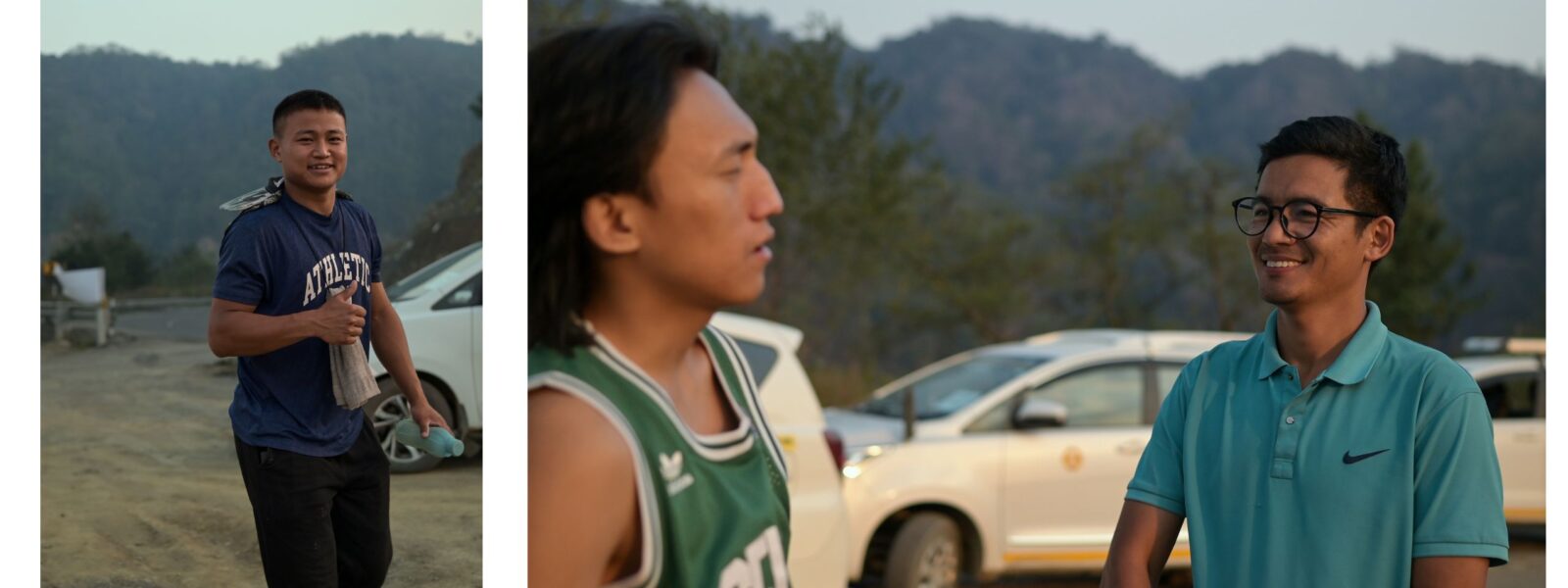
Spring 2024 marked the 80th anniversary of the Battles of Kohima and Imphal and so provided an ideal opportunity to commemorate the memory of all those involved in the conflict and to see if we could recreate the Assam Regiment’s remarkable journey. Bertie and the Sampan Travel Team brilliantly put together the logistics of the enterprise which allowed us to re-enact the walk to the hour, replicating the departure at midnight from Jessami and walking continuously to the CWGC Cemetery in Kohima, arriving at exactly 3pm on 3 April, 80 years to the hour from when the Assam soldiers had arrived.
It was an honour and a privilege to take part in the modern 39-hour, non-stop walk. The whole trip began with a gathering of all the walkers for a delicious Naga dinner at a replica of the District Commissioner’s House on the Kohima ridge itself. A tour of the Kohima battlefield the following morning allowed us all to orientate ourselves, before we set off in a 16 car convoy for the 9 hour drive to Jessami – quite a sight in the remote Naga Hills! A remarkable feast at the village of Phek en route, where we were warmly greeted by all the villagers and treated to traditional songs and dances, provided a small insight into the generous hospitality of the Naga people, something that was to be a regular feature of our trek.
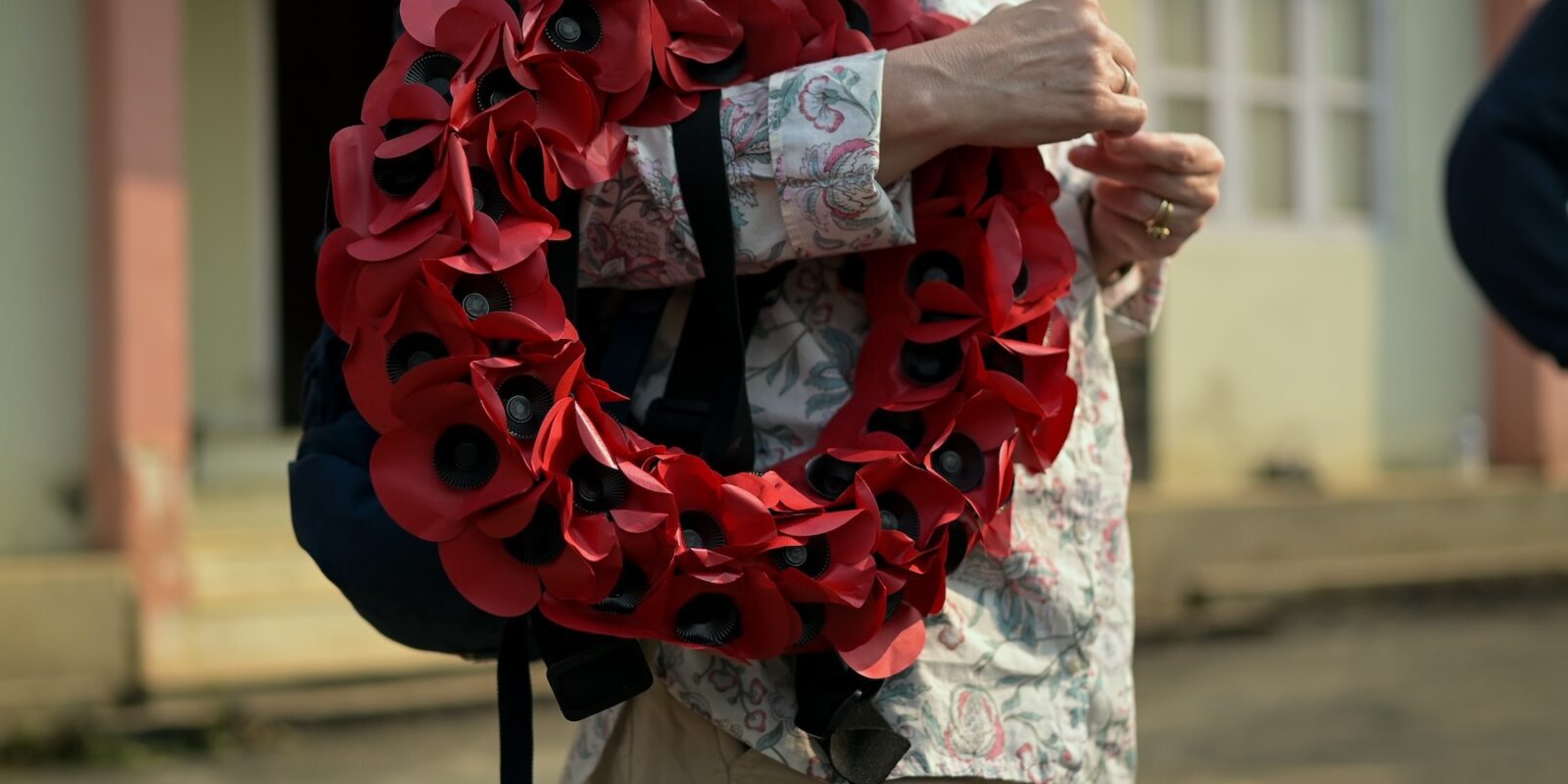
As dusk fell, we pulled up the final hill into Jessami and, once again, we were welcomed, as family, into the heart of the village. The following day allowed us to travel even further east to the village of Kharasom where a company of the Assam Regiment was the first to halt the advance of the Japanese. The ultimate selfless sacrifice of a young Captain, Jock Young, was remembered and a wreath lain in the final perimeter he so bravely defended. The rest of the day was given over to final preparations for the walk itself as we contemplated the quite enormous task ahead of us.
When you go home
Tell them of us and say
For your tomorrow
We gave our today
And so it was, at midnight on 1st April, we gathered at the Assam Regiment Memorial in Jessami, which marks the spot of the Battalion HQ of my grandfather, and set off into the darkness on our adventure.
The support we received from the local Naga population along the entire route was overwhelming. Without them, it would not have been possible, just as was the case for the Assam soldiers 80 years ago. We were greeted with wonderful feasts and warm welcomes in every village we passed through; we were regaled by the village elders with stories of their experiences in the war, handed down over generations; and we were respected for rekindling the memories of those past who should never be forgotten. Many of the locals walked some of the stages of the withdrawal with us. In one village, we were told we were the first westerners to visit since the Assam had marched through in 1944. It was a particular delight that so many schoolchildren were involved, both through all the villages during the walk, and also at the ceremonies at its conclusion in Kohima. The walk was breathing life into the memories of all those caught up in the campaign with each step of remembrance we took.
And, my goodness, the 39 Hour Walk was hard!
If we were not walking downhill, we were walking uphill – there was no level ground – eventually totting up an astonishing 5,300m total of elevation change. Three-quarters of the walkers managed to complete the trek within the time. The tally of blisters would challenge any Excel spreadsheet; murmurings of chafing abounded; milestone markers became things of wonder and beauty as we counted them down; Naga soup was a saviour, as was the chai; and trail mix and electrolyte solution were consumed with equal fervour. However, the support of the local Nagas, the comradeship and the memory of those who had trodden those same tracks before us kept us going. And, despite the difficulties, the whole experience was simply joyful!
But what we achieved was really very tame by comparison with the deprivations endured by the officers and men of the Assam Regiment in early April 1944. Whilst the Siege and Battle of Kohima still lay in the future as they marched into Kohima, the 2024 walkers all knew what those soldiers suffered between 3 April and the garrison’s relief by the 2nd (British) Infantry Division on 18 April 1944 and their own move back to Dimapur on 20th April. While enticing thoughts of a shower, a good curry, and a soft, dry, warm bed encouraged the modern 39-hour walkers to press on, we all appreciated the vivid contrast with the events of 80 years before. Our respect for these men grew with every stride that we took through the forbidding Naga Hills.
As the walkers returned to their homes around the world, we remembered that, 80 years earlier, the 260 men of the Assam Regiment, their counterparts in the Assam Rifles, reinforced two days later by 500 men of the 4th Battalion, Royal West Kents, together with a few ‘odds and sods’ – a garrison of around 1,500 men – prepared to defend the town from no fewer than 15,000 well-prepared and highly-motivated Japanese.
The 2nd Division Memorial stands at the bottom of Garrison Hill, just below where the 80th Anniversary Commemoration Service on 4 April 2024 was held. On it are inscribed the words of the ‘Kohima Epitaph’:
WHEN YOU GO HOME
TELL THEM OF US AND SAY
FOR YOUR TOMORROW
WE GAVE OUR TODAY
Our walk is but a modest recognition of these inspiring words which ring down the ages.
Sampan has turned Charlotte’s epic trek into a yearly endurance challenge each April … With Charlotte leading the way. Find out more here.

