Subscribe to our mailing list
We are still here! Let us send you tips for travelling through Myanmar and stories from the road …

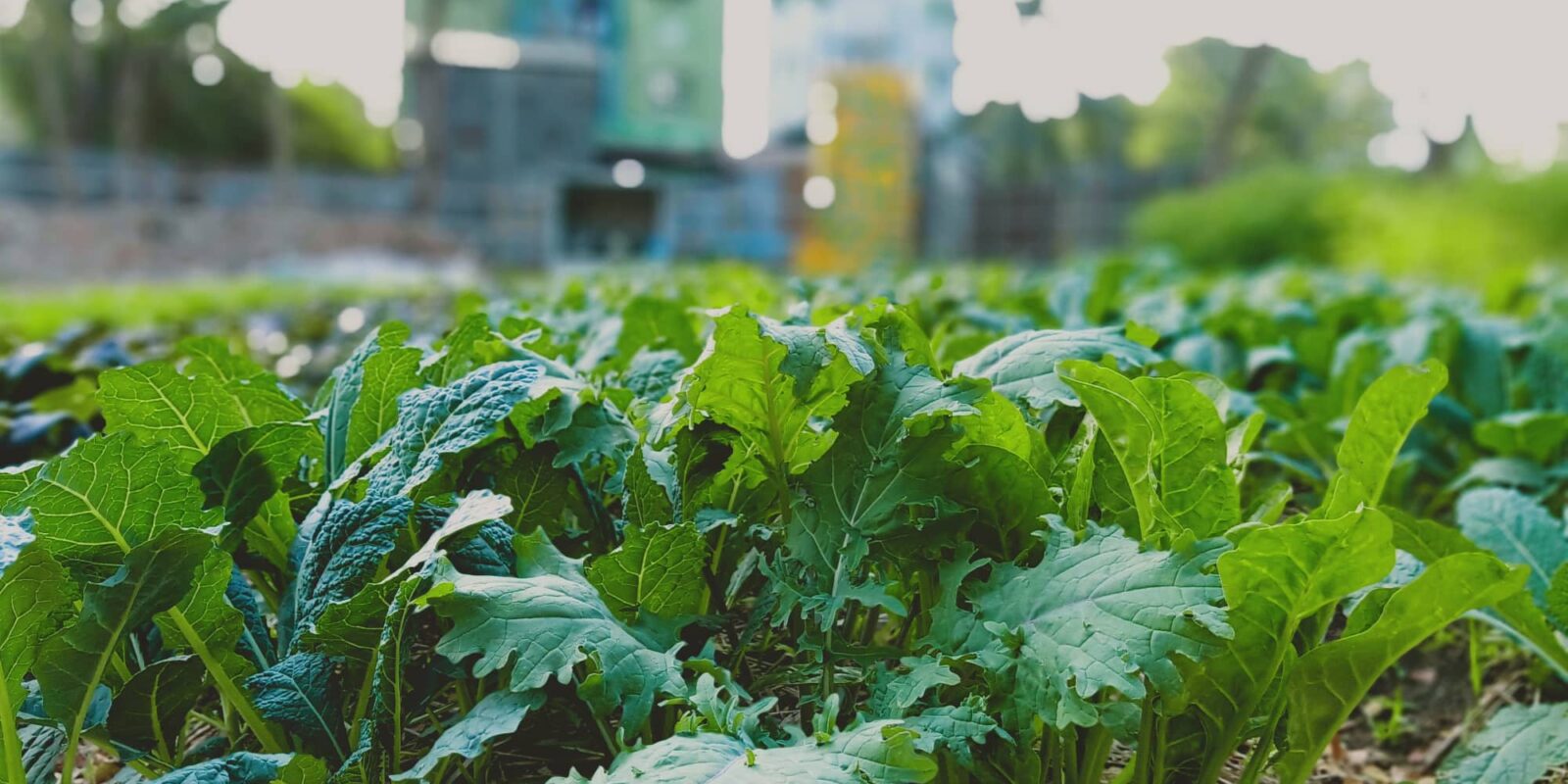
Here, on this patch of green nestled in Yangon’s urban sprawl, the city’s chaos feels a world away. Instead, the farm hums with the croak of frogs, the chatter of a close-knit team, and the occasional swoop of kingfishers overhead.
Kokkoya is more than a farm – it’s an urban sanctuary where nature and community converge. Tucked behind the bustling streets of Myanmar’s largest city, it’s a place that defies expectations. Yes, it’s a farm, but it’s also a café serving fresh, farm-to-table meals, a market selling organic produce, and an educational hub inspiring young minds. Visitors often describe it as an oasis, a bubble of calm in the midst of a hectic city. But beyond the serenity, Kokkoya is a site of innovation and resilience, deeply rooted in Myanmar’s agricultural realities.
Across Myanmar, farmers face mounting challenges. Floods wash away rice fields, rains arrive too early or too late, and temperatures climb year after year. For decades, agriculture here has leaned heavily on chemical inputs – fertilizers and pesticides that have become increasingly expensive and environmentally damaging. But amidst these hurdles, regenerative farming is emerging as a hopeful alternative.
At Kokkoya, we’ve spent the last seven years working with organic farmers across Myanmar, selling their produce through an online shop and delivering it directly to customers in Yangon. This year, we’ve taken our work a step further by launching a soil health project – a grassroots effort to equip farmers with tools to better understand and nurture their land.
The project revolves around a simple app. It’s not high-tech, but it doesn’t need to be. Farmers use it to make observations: counting worms in a square foot of soil, photographing roots, or measuring organic matter. These seemingly small collections paint a bigger picture of soil health and biodiversity, critical for thriving ecosystems. Over time, this data will help farmers make informed decisions and adapt to climate challenges.

One of our recent training sessions brought together farmers from across the country to discuss biodiversity – not just in fields, but in life. A teammate summed it up beautifully in our group chat afterward: “Kokkoya is like a mini-ecosystem. It’s not just microbial diversity in the soil; it’s also the people and animals that make this place thrive.”
He’s right. On any given day, Kokkoya bursts with life. Five-year-olds play guessing games during school visits, marveling at tropical fruits. Herons perch on the fence above the pond, while our team shares jokes and stories while weeding the beds. These moments of connection – to the land, to each other, and to ourselves – are what keep us going.
Connection is at the heart of everything we do. From urban plots to remote farms, Kokkoya’s network is a patchwork of stories and resilience. This year, many of our partner rice farmers lost their first planting to floods, but they persisted, planting again despite the odds. It’s their resilience that inspires us to explore new techniques, like seed-coating – dipping seeds in compost tea before planting. It’s a simple, cost-effective practice that holds the promise of healthier crops and more efficient farming.
On the farm, our team approaches these experiments with childlike curiosity. We brew microbial sprays, count worms, and pull up roots to study their rhizosheaths – the sticky soil that clings to healthy roots. These practices, rooted in regenerative agriculture, deepen our connection to the soil and to each other.
For visitors, Kokkoya offers a chance to experience this connection firsthand. You can walk through rows of leafy greens, taste fresh salads picked in front of you, or sip coffee at the café watching and hearing the startle of spotted doves as someone walks through the farm. Workshops and farm tours give you a glimpse into regenerative practices, while school visits introduce children to the wonders of nature. It’s a place where learning and leisure intertwine, leaving you both inspired and refreshed.
On the farm, our team approaches these experiments with childlike curiosity. We brew microbial sprays, count worms, and pull up roots to sudy the sticky soil.
Yet, Kokkoya is not just a retreat; it’s a hub for action. Over the next 18 months, our soil health project will deepen our ties with farmers across Myanmar. Together, we’ll share knowledge, troubleshoot challenges, and explore new ways to build resilience in a rapidly changing world.
As the fields around us grow greener with the season, it’s hard not to feel a sense of hope. Farming anywhere is tough, but in Myanmar, it requires extraordinary grit. Still, small actions – a bag of compost, a shared technique, a new perspective – can ripple outward, sparking change in ways we might never anticipate.
For those of us who call Kokkoya home, this farm is more than just a workplace. It’s a sanctuary. It’s a place where we find purpose, connection, and moments of joy, whether it’s spotting a sunbeam snake in the undergrowth or hearing the laughter of children discovering the magic of farming.
As we plant the next round of crops, we know the future is uncertain. But for now, we have Marigold slithering through the beds, the tuk-tuk-tuk-tuk of coppersmith barbets in the trees, and the promise of a new season ahead. And that’s enough to keep us going.

