Subscribe to our mailing list
We are still here! Let us send you tips for travelling through Myanmar and stories from the road …

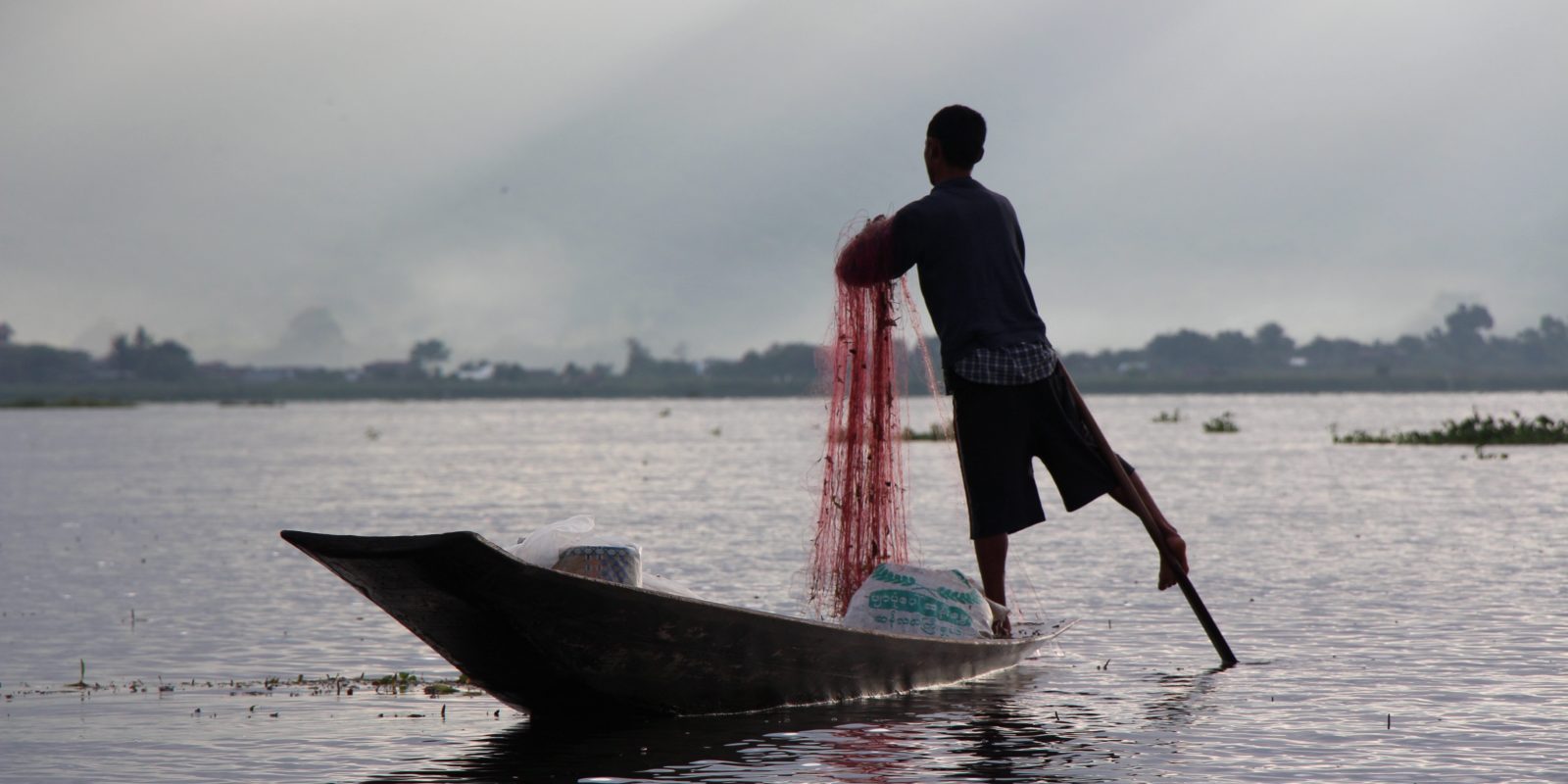
The inhabitants of Inle are the Inthar and when wondering what to do at Inle Lake, there is no better start to the day than waking up before dawn for an Inle Lake boat trip to see the fishermen as the sun rises.
Due to the similarity of the two vernaculars, the provenance of the Inthar is believed to be the southern city of Dawei. Legend tells of two Inthar brothers who came up to the lake in 1359 to serve the local Shan sabwa or ‘sky lord’. The sabwa was so impressed with the diligence and character of the two brothers that he invited a further 36 families from Dawei to emigrate north and populate the lake. A competing theory is that the Inthar were not economic migrants but in fact refugees from Dawei, fleeing to Shan to avoid the Bamar-Siam wars.
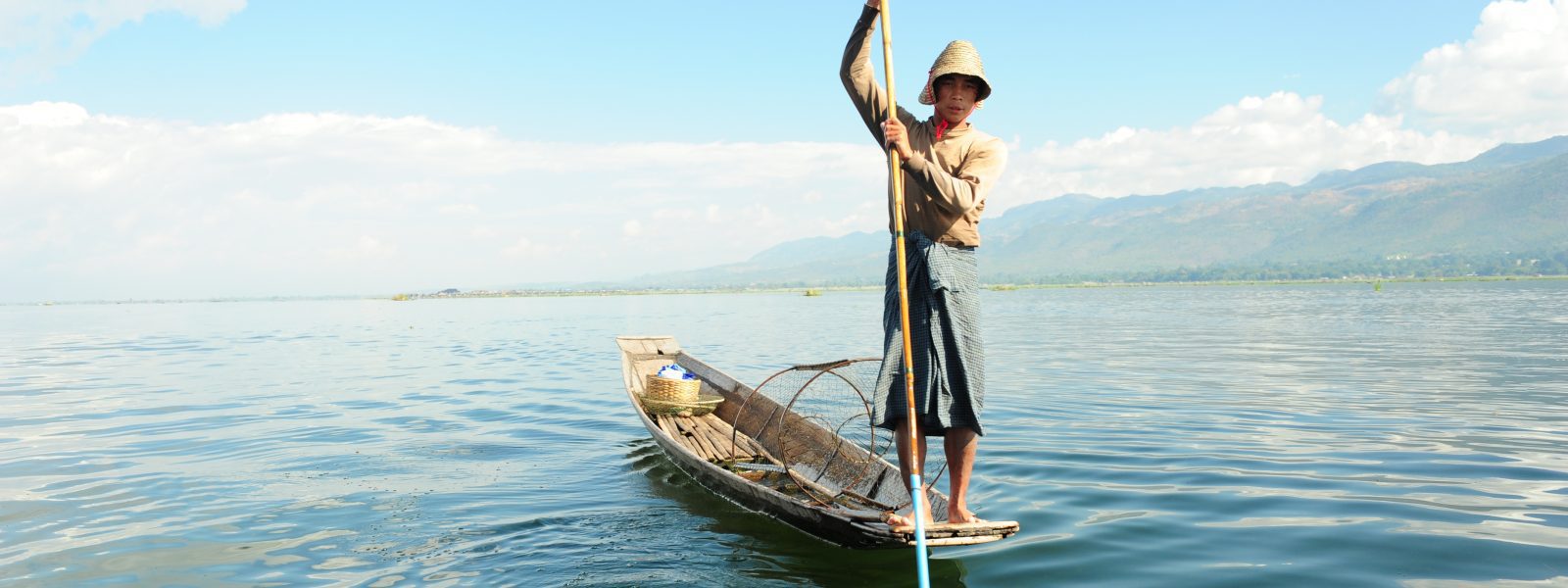
The Inthar’s idiosyncratic way of fishing has propelled the Inthar across postcards and tour brochures. Today, after the ephemeral stupas of Bagan, the image of an Inthar fisherman balancing deftly on his boat, one leg wrapped around the rudder, the other outstretched for balance, two arms grasping the net and a conical hat topping off the elegant silhouette, is an image used more than any other to conjure the allure of the Golden Land.
Dawn is also prime time for keen twitchers. The lake has been an official Wetland Bird Sanctuary since 1985 and thus activities such as morning bird watching tours have become increasingly popular things to do on Inle Lake for travellers. Alongside the clamorous reed warbler, early risers may be lucky enough to catch sight of rarer species such as Jerdon’s bushchat, the collared myna and the crimson sunbird.
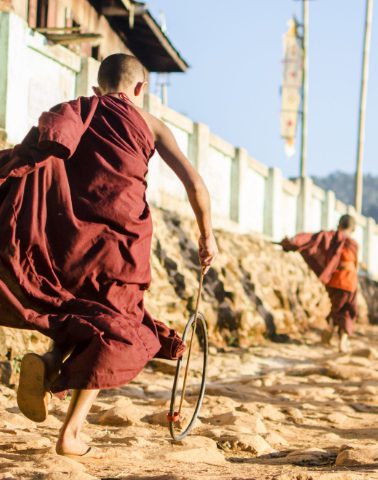
Before continuing your Inle Lake boat trip you can return to your hotel for a well-deserved breakfast. Looking across the lake and its banks you will see smoke tendrils ascending from village kitchen fires and hear the ringing of bells that accompanies the monks and young novices on their morning alms collection.
As morning stretches into midday, recommence your Inle Lake tour by catching a boat to Phaung Daw Oo Pagoda. As your boat bobs up next to the pagoda jetty, the wrinkled hands of gentle crones will help you onto the platform and with few words offer bags of seeds for no more than tuppence to feed the myriad pigeons of Phaung Daw Oo.
(Note: Be sure to visit Phaung Daw Oo in the morning; in the afternoon the birds are fully sated and huddled in the rafters.)
From Phaung Daw Oo, travel onto Nga Phe Kyaung monastery. This monastery gained notoriety in the 1990s as the ‘Jumping Cat Monastery of Inle Lake’ as locals visiting the monastery noticed the head monk there training the cats to jump through hoops or even his own linked arms. The rumours spread and soon the number of visitors to Nga Phe Kyaung mushroomed. When a new head monk took over as head abbot at the monastery, the performances came to an end. The cats remain at the monastery and it is rumoured that for a while, the more seasoned among their number still retained their former show biz know-how, and would jump through your arms if your positioned yourself in the right way in their direction.
(It is worth nothing that travel Rory Maclean had more to see on the jumping cats. Visiting Nga Phe Kyaung in the 1990s, he writes in his book Under the Dragon, that “the monks bullied and shoved angry, tail-snapping cats through hoops for the entertainment of tourists.”)
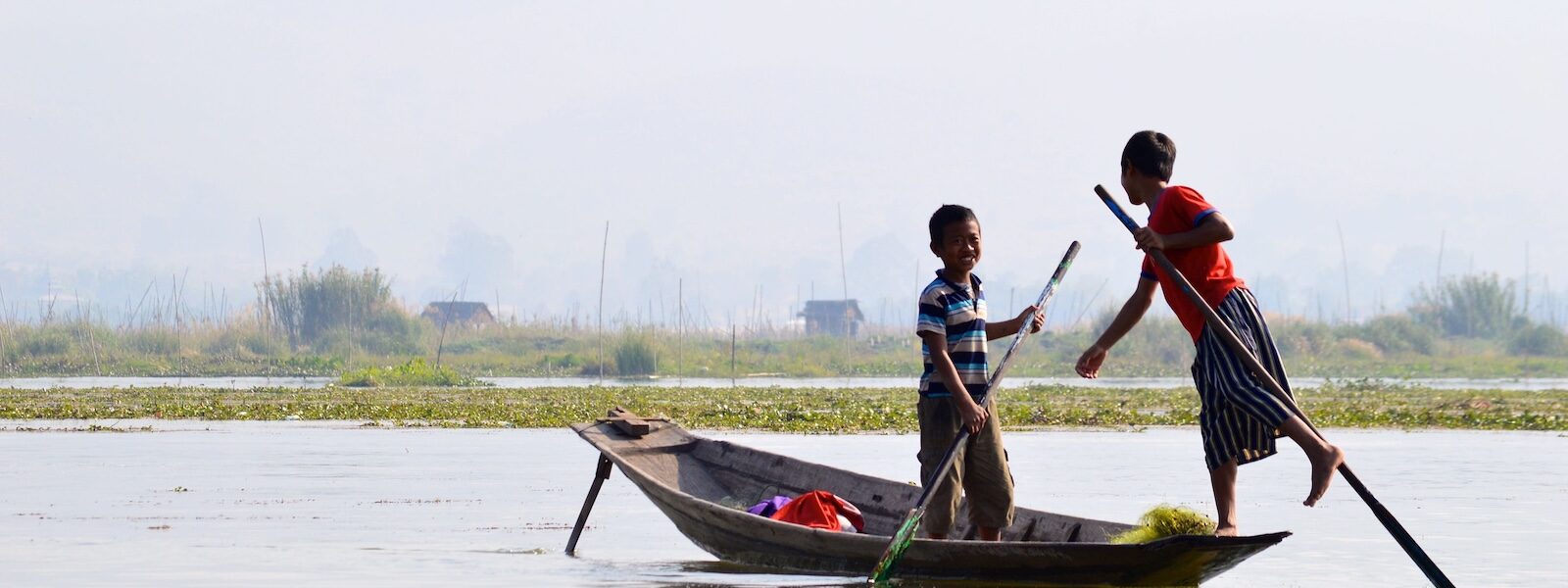
From Nga Phe Kyaung, take the boat further into the marshes west to the small town of Indein for the 5 Day Rotating Market, commonly regarded as one of the most memorable things to do at Inle Lake. Here people of the Shan, Pa’O and Danu ethnicities come down to join the Inthar to sell and buy local produce. We would recommend picking up one of the bright and sturdy Pa’O tote bags that are seen throughout Shan State, sported by school children, teenagers and farmers alike.
When you have exhausted the market, explore the crumbling pagoda fields. Here one can creep through brambles and undergrowth to peer at ornately carved zedi and Buddha images sitting waist deep in rubble.
From Indein, you can travel on to see the silversmith and weavers of Inle.
Inle Lake is one of the last places where you can see the technique of lotus weaving. Here, threads are painstakingly extracted from the lotus plant, taking up to two months to extract one kilogram of fibre. The stems are cut into manageable sections before being scored, twisted and pulled to reveal a web of thin filaments. Barely visible to the naked eye, the filament is laid out on a wooden workbench and kept moist with occasional splashes of water.
The artisan rolls the moistened fibres together to create a thicker, stronger thread. The finished thread has a variegated colour similar to hemp but with a much softer feel. It is typically left undyed to highlight these natural qualities. The women then use mechanised and flying shuttle looms to weave brightly coloured Shan scarves and subtler designs that combine lotus thread and washed silk to achieve a textural contrast between warp and weft.
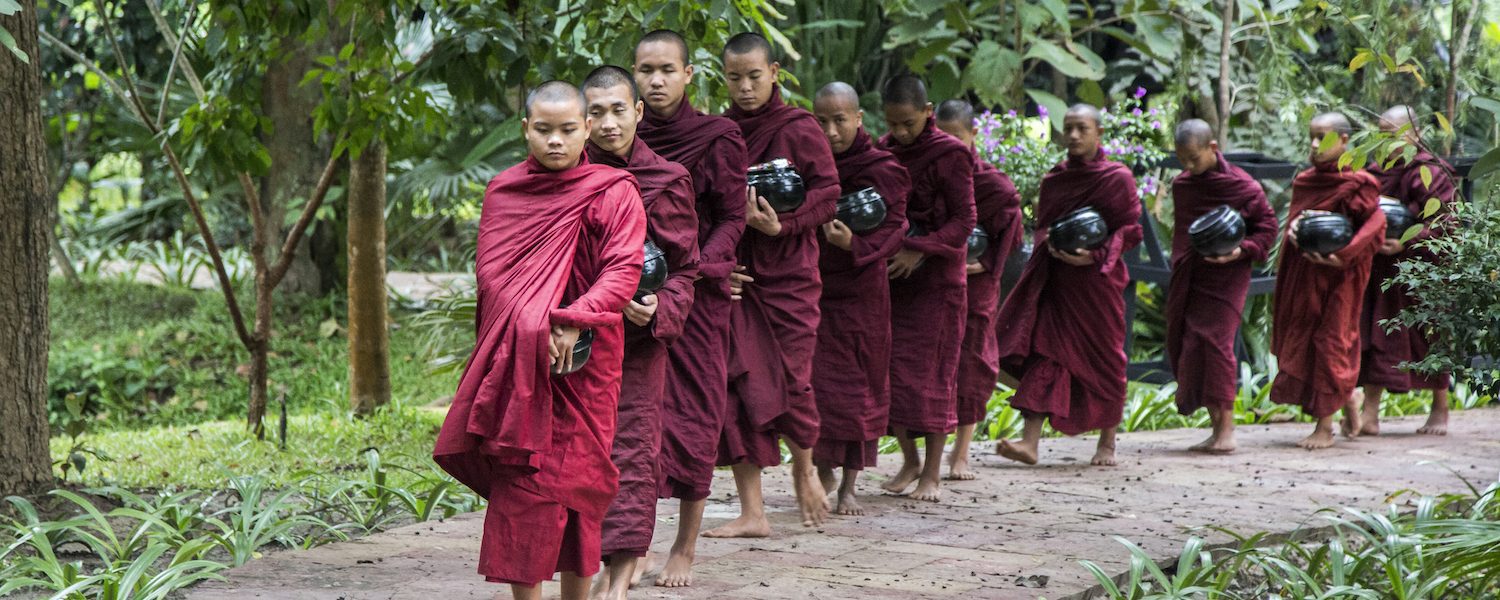
Inthar boys will challenge the Inthu (‘daughters of the lake’) to a taik-tay, salving and gently teasing in rhyming stanzas that evoke the rites and rural traditions of the Inthar.
On the full moon or on Buddhist festivals such as Thadingyut and Tazadaung, the luckiest of travellers may catch a glimpse of the Inthar youth serenading to each other in traditional “taik-tay” duets. Much in the way that the land-lubbing Bamar youth use a pagoda festival as an excuse for flirting and clandestine promenades, so Inthar boys will challenge the Inthu (‘daughters of the lake’) to a taik-tay, salving and gently teasing in rhyming stanzas that evoke the rites and rural traditions of the Inthar.
Taik-tays do not appear in travel brochures, but they are as longstanding an aspect of Inthar culture as the conical hats and sampans. These more subtle conventions are not one of the promoted Inle Lake attractions and thus there is the risk that while that which can fit on a postcard will be sustained, the literature and even the language of the Inthar will gradually pass away.
Perhaps more than anywhere in Myanmar, the ecological well-being of Inle is under threat. Inle Lake now covers less than half of the area that it once did. Mining for gold has led to the release of pollutants into the river and the relatively recent use of chemical fertilisers and pesticides in the surrounding farms has intoxicated the water.
Furthermore, the introduction of alien fish has led to the demise in species unique to Inle. The Inle carp for example, has long been hybridizing with the common carp after the introduction of the latter. Today it is near impossible to find a pure Inle carp. This is what is referred to in biology as the ‘homogecene’, where what is unique and special collapses and wherever one goes the same fauna and flora is found.
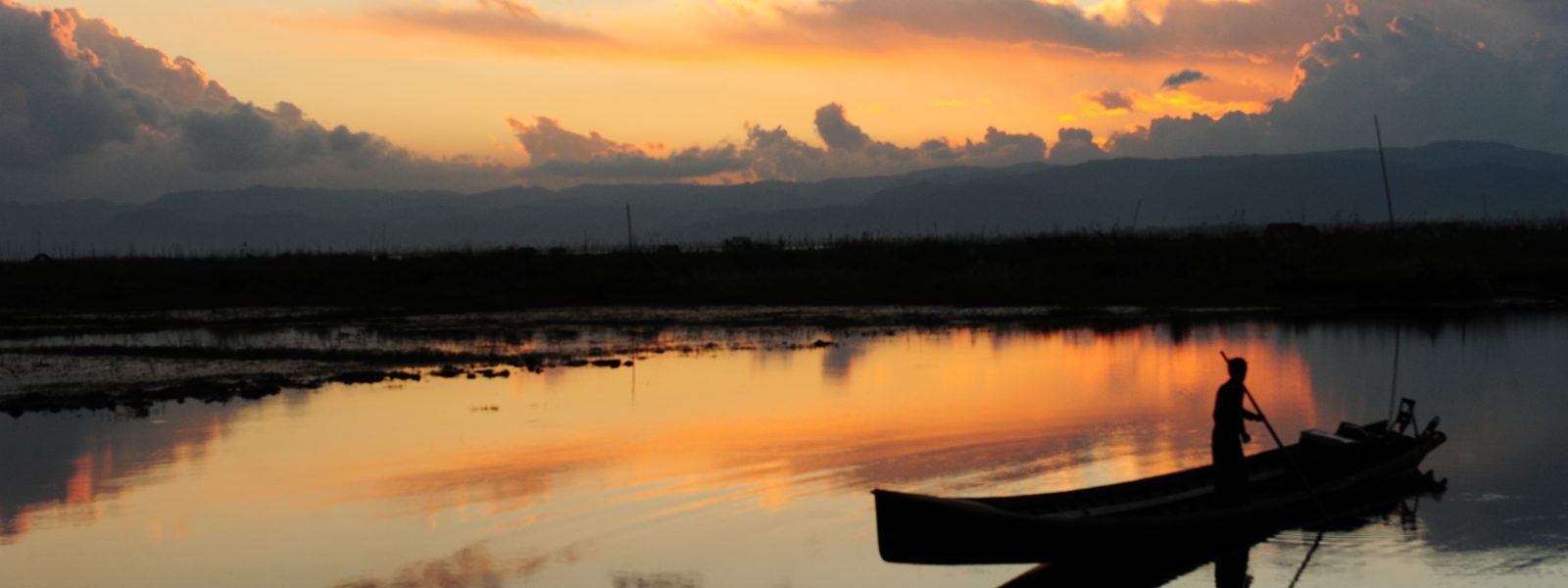
Myanmar began opening up to the world in the 1990s, and this brought a more positive cross pollination of cultures: fresh opportunities and the introduction of new tastes. For example, at Inle visitors can both take reviving refreshment and learn more about the Inthar people. Here, Inle Lake travellers can sample the four wines of Myanmar’s second ever vineyard while looking out upon one of the best view of Inle Lake that we know of.
An alternative option for sunset, is the village of Maing Thauk, which sits half on the banks of Inle Lake and half upon stilts in the water. It was originally intended by the British to be the principal hill station in the Inle area. However a severe bout of malaria struck down almost all the residents and the colonialists up-sticked to Taunggyi; then a small Shan village, today the capital of the entire state.
Maing Thauk had been the location of Fort Stedman, the one-time administrative centre of the region and the first headquarters of the audacious and swashbuckling George Scott, the man lauded for coercing the proud and unpredictable Shan princes into the imperial British bosom (He is also the man credited with introducing football to Burma).
When reaching Maing Thauk in search of Scott’s former residence in the 1990s, the journalist Andrew Marshall writes in his excellent book The Trouser People, that “Fort Stedman was long gone. Its barn-like barracks, the stranded bones of its officers, Hildebrand’s strawberry patch – all of it had been rightfully reclaimed by the jungle.”
The village nonetheless remains a idyllic spot, and you may be able to take a canoe ride around the stilt houses in the golden light of dusk.

