Subscribe to our mailing list
We are still here! Let us send you tips for travelling through Myanmar and stories from the road …

So said Emilie Röell, founder & director of Doh Eain, at her TEDx talk in Yangon, June 2017.
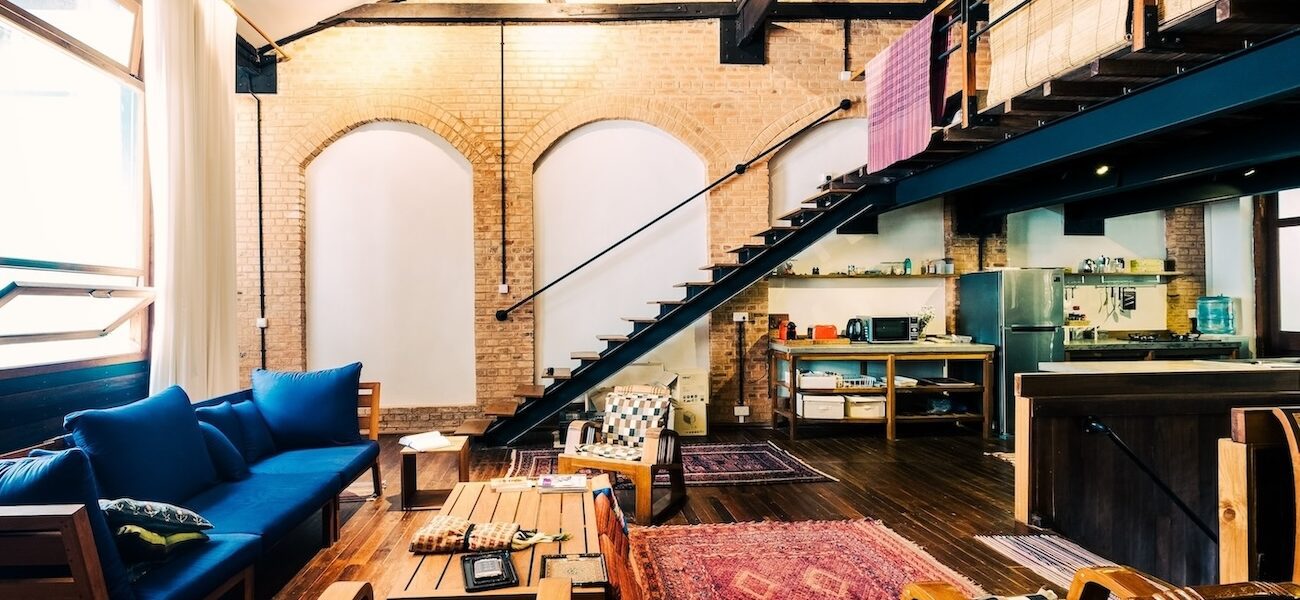
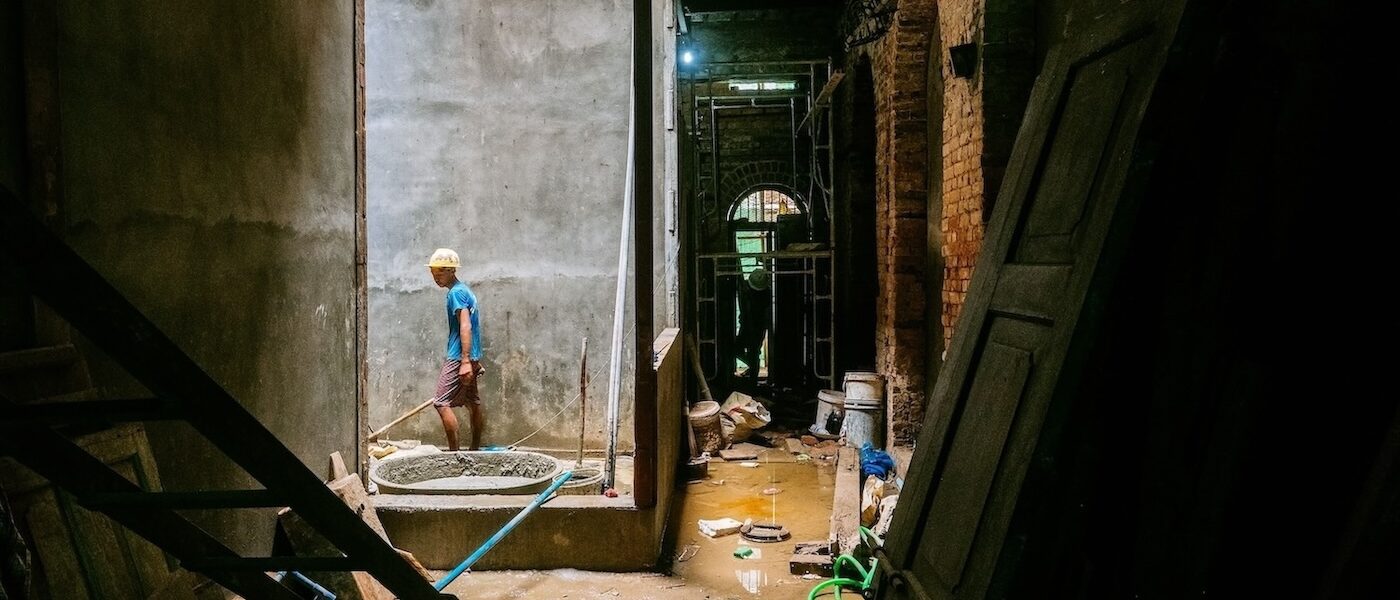
Doh Eain had begun informally two years before, when Emilie helped her friend (and now colleague) Gulam and his family renovate their apartment in a historic building on Bogalay Zay street in downtown Yangon. Gulam’s apartment was upgraded to modern standards and rented out to a new tenant. Renovation was paid back over time. Soon after, other family members and friends who owned heritage spaces started approaching Emilie with similar requests for restoration help.
Emilie & Gulam realised that these services were not only of value to Yangon in maintaining its historical and cultural identity, but also that they supported neighbourhoods’ socio-economic growth, and contributed to social cohesion, wellbeing, sustainability and resilience.
Doh Eain was born, and today continues to work to preserve heritage, improve public spaces and organise activities that connect people with places, across multiple cities in Asia.
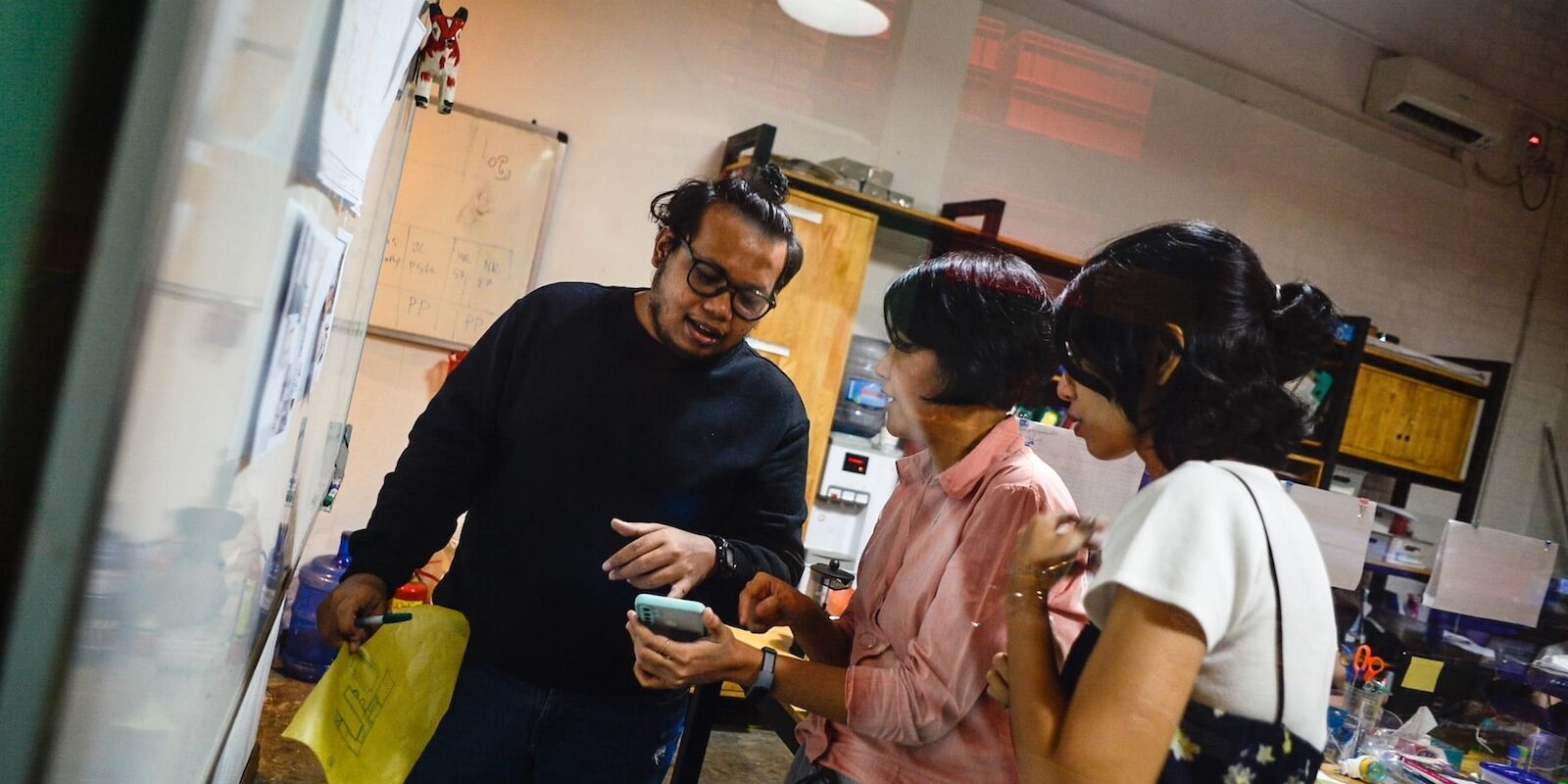
In August 2022, Sampan’s MD Bertie Alexander sat down in Yangon to speak to Tun Ye Wai, Doh Eain’s Director of Property & Design, about Yangon’s heritage buildings and the lives that have grown up in and around them. Tun was born in Sittwe, but his family moved to downtown Yangon when he was one years old. He has worked with Doh Eain since 2018.
Bertie began the conversation by expressing his surprise to Tun, upon hearing when re-watching Emilie’s TEDx, that Yangon has more heritage buildings than any other city in Southeast Asia …
Yeah its true. And to add to that, 70 per cent of these are privately owned. Which means they are not protected from the external factors like demolition. So that is quite alarming for us. Two per cent of these buildings are getting demolished each year.
The government has to have their own policies to deal with those heritage properties. As you know, most of them are left unoccupied or unused. They don’t see the value. If the government opens up to private collaborations then there will be more opportunity. The government should lease them out and give subsidies and incentives for companies to come and occupy the space. Like what AYA bank do with the Co. & Rowe Building. That is a really good example.
It’s kind of a messy situation. It’s been renovated but it’s not been activated. It’s good that it has been renovated. But is it being used? Is it open to the public? That’s another thing.
Having a blue plaque gives a building protection which is a good thing. But I think when they do maintenance that should also go back to Yangon Heritage Trust. One thing is putting up a plaque but the longevity of the buildings should be monitored as well.
The way I see it, by having the blue plaque, even if not official, it gives the building more public exposure. But the blue plaque buildings are all the iconic building that no one actually wants to demolish. They are understood as a national treasure. Demolishing is one thing, but maintaining is another thing. Maintaining standards and the authorization for additions that respect the building are also important.
Inya Lake Hotel symbolizes an era – the socialist era. It was built in the ’60 or the ‘70s. So that’s the significance that the hotel has architecturally, society-wise as well. So it deserves a blue plaque, I would say.
It really does speak to architecture at that time. If you notice in Myanmar our architectural timeline stops after independence. Because at that time we got closed-off due to the political situation. We don’t really have modernist buildings – that use of clean, minimalist architecture. Inya Lake Hotel is a modernist building. But we don’t have art-deco movement from the ‘50s and ‘60s. That era just doesn’t exist here. And then in the ‘80s, we started getting a bit of those architectures in some of the government buildings, like the Institute of Technology on Natmauk Road, and there is the Buddhist Literature Hall in Kabaw Aye Pagoda compound.
The buildings around Pansodan. When you look at the grid, the Sule area is one of the oldest townships with the government offices, and then it expands towards Botataung. The buildings at Sule area have more Victorian architecture, and then moving down towards 41st Street it is getting simpler. There is a good ten- or twenty-years difference between those buildings.
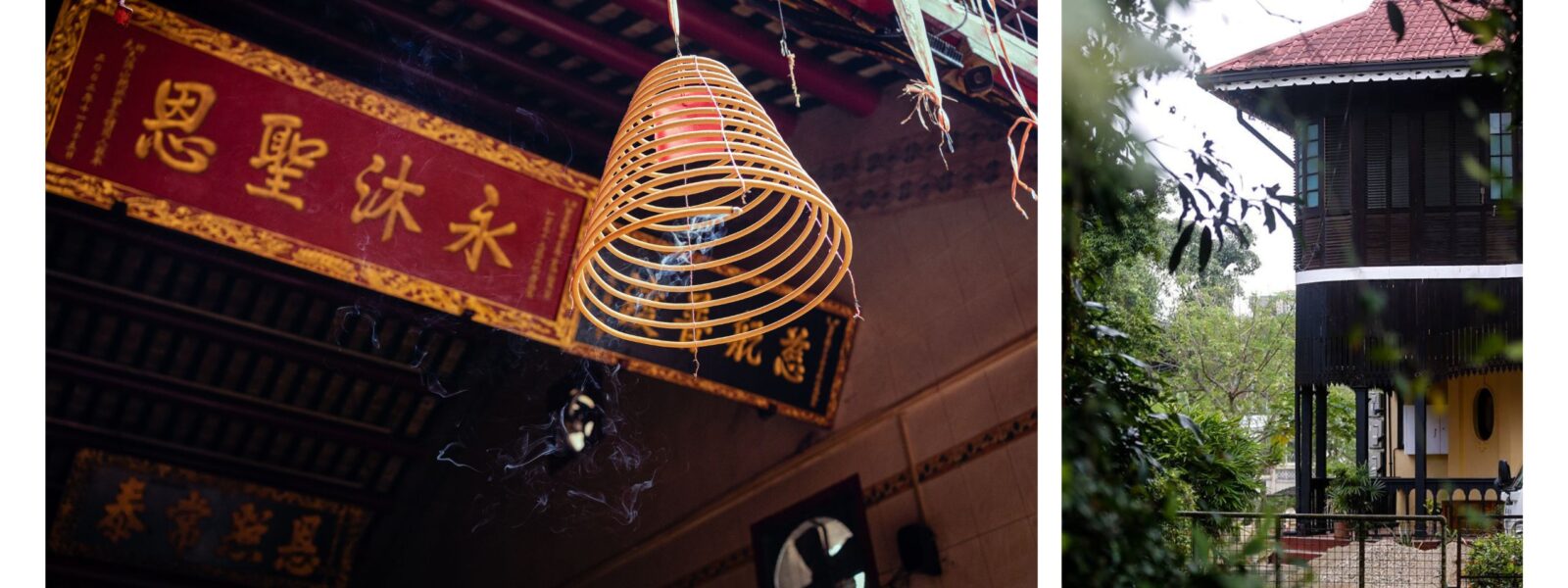
Chinatown has its own kind of history. The buildings are influenced from their origins rather than the local environment. They had their own carpenters, their own masons.
They have fewer heritage buildings, but they are protected. There is a district in downtown KL where Chinatown is protected, so you can’t demolish any buildings. Now it has become a hipster area where a lot of cafés are. You can renovate, but you can’t change the facade or the footprint. But inside, you can change it. In terms of heritage adaption in Malaysia, it is quite good. They have really fancy cafes where you still keep the footprint and the streetscape.
Ten years ago when I was living in Penang, the downtown wasn’t alive and well. It was like Yangon. There are a lot of heritage buildings but the buildings were not renovated. But when I went back in 2018 they had made it car-free. They have a weekend market, they have renovated the public buildings, which was followed by a lot of private companies given subsidiaries and incentives to build the place up. So instead of just the beach, people hang out in the downtown. They call it a “heritage district”: a lot of bars are there, a lot of cafés are there, alleyways with murals. It’s having that 10-year urban policy to bring people back to the space. So it is one thing for Doh Eain to do it in Yangon, but the scale would be far greater if there was a public urban policy in place, with a lot of players doing the same thing – that would be much better.
That’s our goal. For people to see the value in heritage buildings. To see how they can generate income from them. That’s important. And it then encourages other people. We meet a lot of owners who say, “Why should I keep this old dump?” They don’t know the value. We have to share a light on what can be done.
There are layers. The heritage buildings in Yangon are not just a tourist attraction, as in other countries. This is where people actually live, and businesses operate, and people use. It’s organic, its chaos. If we take this out, it’s just empty buildings with no culture. For me, if you go to other countries, you see people just using the facade. Yangon has to be cleaned up, but the chaos represents the social and cultural situation of Yangon.
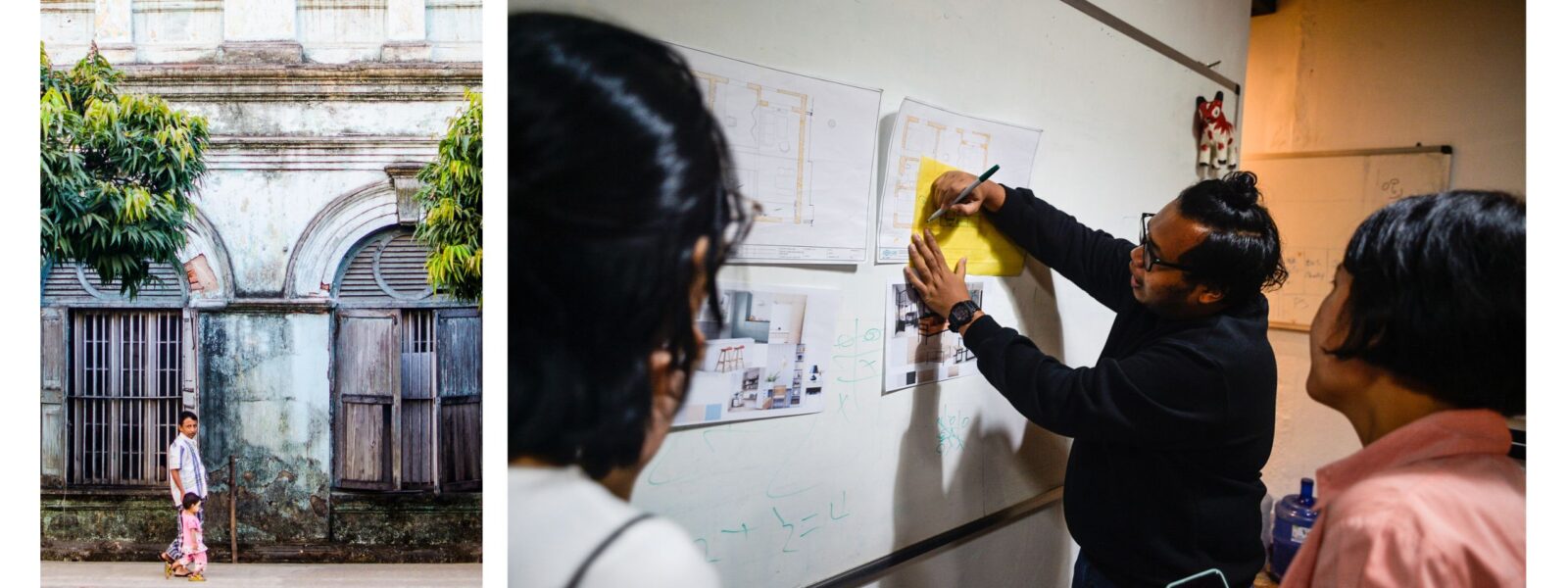
At Doh Eain we believe in participatory design. So I would set-up a block as a prototype space. We would set up a workshop with our team of consultants with the stakeholders that live there and see what kind of space they envision. We have to fit into their shoes to understand how they use this space, how they use this street, this building, only then will we get the best result. Now it is chaotic but we don’t want them [the stakeholders] to get kicked out. How will they adapt in the new surroundings? This is very important for us.
It’s not going to be like what we see in the Western world. Yangon will always be chaotic. The best thing that could happen is for Yangon to be like Bangkok. Because our urban policy is not strong. Let’s say the country gets better, development will be booming again. And we don’t have proper systems in place. So there will be an influx of money coming in, people will want to do development. And if we don’t have any urban policies in place, or building by-laws in place … Unless we come up with policies like Penang to protect certain areas: “OK, this we don’t touch”…
I know YHT had that picture in their office but they couldn’t stop that overhead bridge because they don’t have the power. The government did what they want to do, even before. They didn’t consult any urban planners, or YHT, or anybody, they just did it. It is an eyesore, it’s a waste of money, a good proper traffic system would be better.
No. That is also a monstrous thing … I am talking about the footbridge that connects to the jetty at the bottom of Pansodan Road. It blocks the Port Authority building. That Port Authority building is the pinnacle of downtown Yangon. It was the first thing that people would see when they arrived in Yangon. So YHT had the vision, but they didn’t have the control.
It is possible. The heritage buildings will stand. But the new ones are going to go. That is for sure. We are in a seismic zone. I think any building higher than 7 floors is going to go. That’s the way I see it …
In Mandalay, architecture-wise, it’s better than Yangon. But the style is more Burmese than colonial. Same era, but the influence is different.
Yes. You can see little details, like peacocks. And their usage of materials is different because the climate is different. I see that mostly in Mandalay area, Sagaing too. In Dawei and Mawlamyine the style is similar to Yangon. The architecture is influence by the architects of that time.
Yeah. That’s exactly it. My parents won’t understand my passion for wanting to live in a heritage apartment because they did it all their lives. They want to move on to something modern, something more functional. Now I live in a heritage building I go through water issues and stuff like that, every day! For my parents, moving out was a big step for them. Making it – living in the suburbs. Even my friends don’t get it. Because they haven’t had much interaction with it. I think in the Western world, these are normal everyday buildings. Your shopping mall or bank can be inside a heritage building. There is a familiarisation with it. Here, most of these buildings are closed off and not accessible. People have just never experienced it. Lack of public-accessibility is why people don’t see the value.
I like the Lower Pansodan stretch. Minus Shwe Bank … That block really symbolizes the history of the city. I like that in that stretch no building has been demolished. I think that is the only block we have left where no building has been demolished. And no condos in the middle.
You know there is the library at the end of 37th Street? I remember that building fondly because I did my private tuition classes there. The private buildings in Yangon they have the office space in the front and then the officer housing in the bank. My teacher was living there. I remember the old stairwell, the lift to go up to her house … I liked walking down the street … Near Shwe Bank there was a good mohinga shop back in the day. I remember walking to Mahabandula Park to get my mum when she came back from her clinic. And some of the shops are still there. There is a print shop at the end of 37th. There is a rice and grilled pork shop on 37th, still here until now, thirty years later …
I think the main thing to emphasize is: Yangon is a unique place. We cannot just restore. We have to think about the culture that comes with it. We cannot just cleanly wipe everyone off and make it beautiful. We need to think about the user, the people that have been living there for centuries. It has to be organic. We can’t just push everybody out. There are squatters that have been living in these heritage buildings for years. It has become their home. There are a lot of layers…
Yeah. It has been almost 100 years since our independence. The British built these buildings and used them and then left. But these Yangon residents have been using them all their lives. There are layers … that is what is important for me. We focus on how we use these spaces; how they have been integrated into Myanmar culture and society. I don’t think of the politics around colonialism. I see them as buildings and how our lives have evolved around them. And I am sure most Yangon residents in downtown feel the same.
This conversation took place in August 2022. It was edited for clarity in May 2025. Find out more about Doh Eain and their sister company Heritage Homes.

